Cobotics revolutionizes the fashion industry
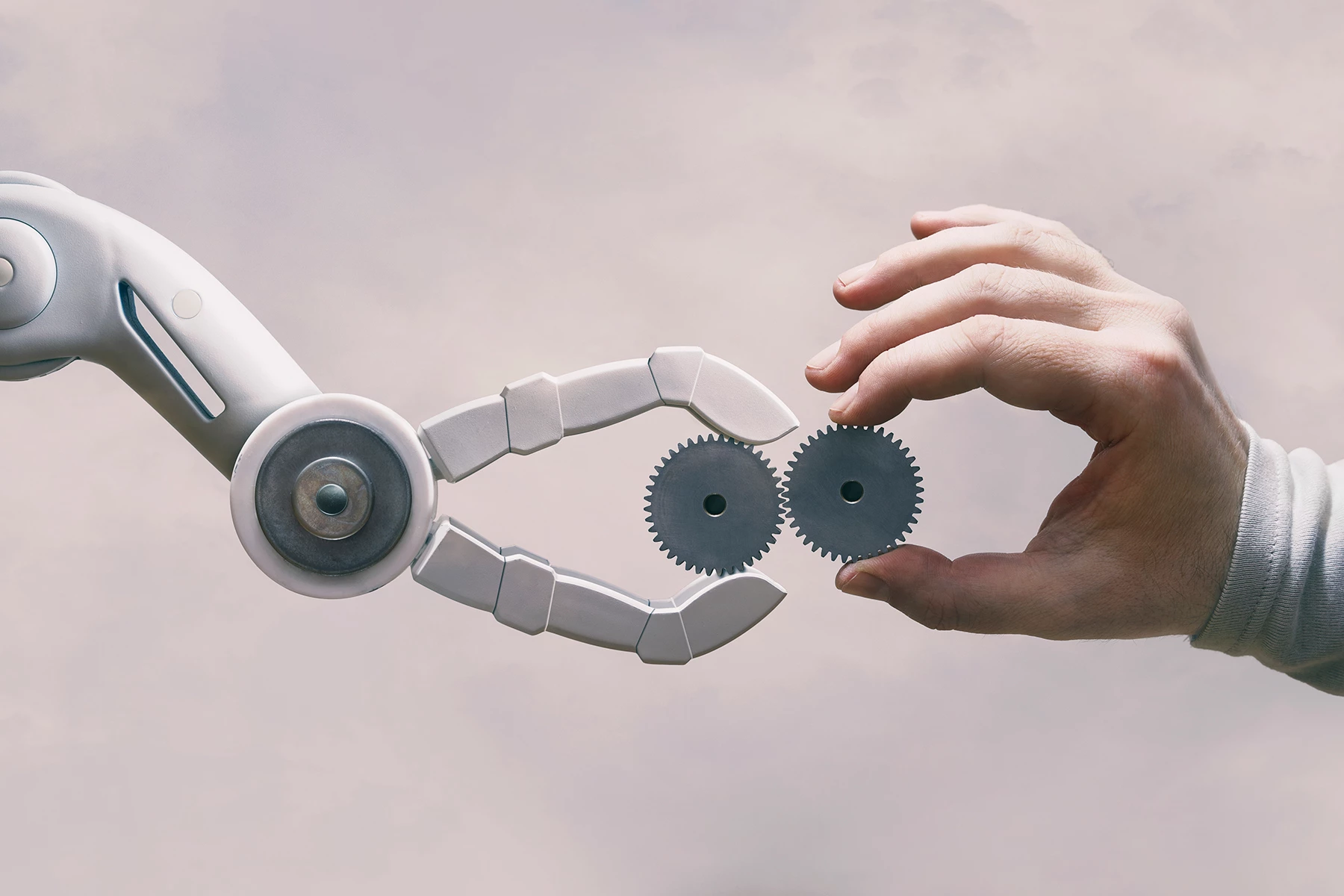
By relieving garment making operators of thankless tasks, the cobot - or collaborative robot - enhances their savoir-faire and increases their well-being.
Exit the robot, make way for the cobot? In the worst dystopias, the enemy robot takes the place of the human and seizes power. With the cobot, we enter an era of progress, that of industry 4.0, where "the machine collaborates with men to increase their productivity and reduce the drudgery of their tasks" dixit le Larousse. Thanks to cobotics, a contraction of robotics and collaboration, the operator is relieved of repetitive tasks, potentially harmful to his health, in favor of those with added value.
In garment making companies, cobotics enables "versatile and highly skilled staff to deploy their savoir-faire without suffering from drudgery or low added-value tasks" emphasized Victor Spazzola, cobotics project manager at IFTH (Institut Français du Textile et de l'Habillement) at the end of 2022 during a conference dedicated to Innofabmod. Initiated in 2018, co-financed by IFTH, the Pays de la Loire region and the EU, this project dedicated to the garment making industry of the future, includes a component dedicated to cobots. IFTH's partner, Europe Technologies, a robotic solutions integrator and ergonomics specialist, has come up with several solutions for the future, including cobots and sometimes exoskeletons (external skeletons that compensate for operator effort). Fine-tuned in the field at three Innofabmod pilot companies - Confection fléchoise, Getex and Textile du Maine - these have been in production testing since this January 2023.
Before eventual deployment at other players. "We need to be in a real production situation to realize the return on investment. And so it's only in 2023 that we'll be able to see whether the use of these cobots is profitable. The aim is also to reduce the rate of RSI* in the sector" explains Isabelle Guery-Delmon, the deputy director of IFTH's clothing department, which is piloting the Innofabmod project.
Three solutions devised
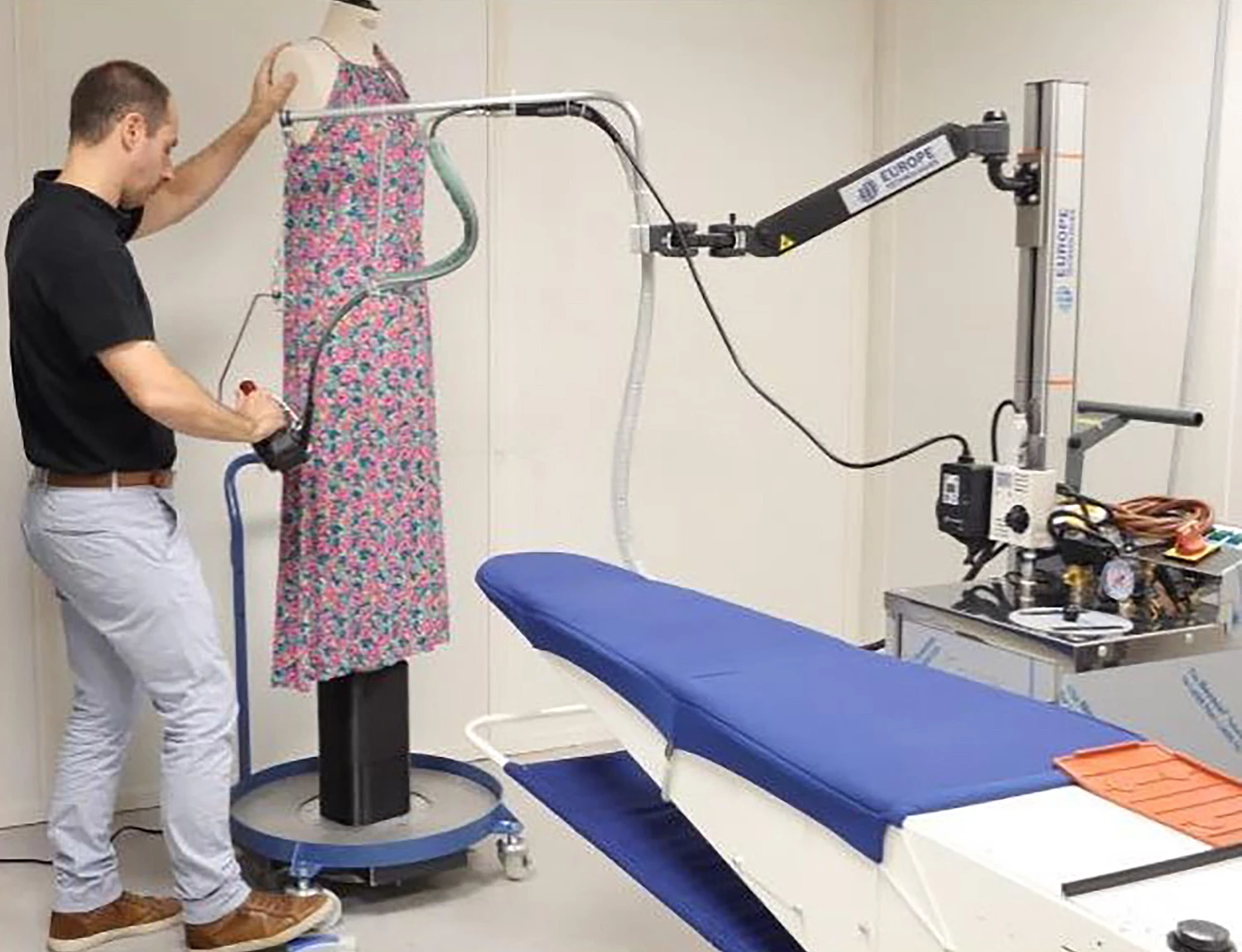
Three tasks incorporating more low value-added gestures and potential MSD risks were chosen. These were ironing, stacking and unstacking fabrics, and moving heavy loads. The first solution, tested at Textile du Maine, is an augmented gesture system: a zero-gravity arm combined with a pilot dummy that relieves the operator of the weight of the iron. It improves posture, with an easier switch from horizontal to vertical ironing fashion, avoiding the need to bend down.
A second cobot has been developed at Confection Fléchoise to handle the numerous movements of heavy loads (rolls of fabric, bulky packages, etc.) in the workshop. It can be controlled via an intuitive interface, in follower, command or autonomous fashion.
Finally, a prototype of a stacking-unstacking cobot, capable of picking up and depositing cut parts of different material qualities and formats, has been developed for the cutting output pack preparation station. It is currently being parameterized at Europe Technologies, in collaboration with Getex, a contract manufacturer specializing in outerwear and administrative and military clothing, including CBRN**. For IFTH, which steered the project and co-developed the gripping system, "the great difficulty of the exercise was to work on a gripper that could adapt to all kinds of fabrics", stresses Sophie Pineau, Getex's managing director, interviewed for the occasion. The solution we came up with led to the filing of a patent. Once finalized, the cobot will be integrated for testing at Getex in 2023. "We will then be able to assess the reductions in TMS** and the gains in terms of comfort and time."
Certainly, such investments come at a cost: from 10,000 to 100,000 euros for a cobot, according to Europe Technologies. But partial subsidies can be obtained in the context of employment of disabled people or MSD prevention. A helping hand that can be decisive in adopting these new innovative solutions and improving well-being at work.
* MSD: musculoskeletal disorders
**NRBC: Nuclear, Radiological, Biological, Chemical