CACHÍ: Stylish Pieces for Men's Wardrobes
Born from the meeting between Belén Frias and Élise Girault in Paris in 2018, CACHÍ reimagines the essentials of the men’s wardrobe through the lens of their two cultures. Blending Argentine charm, French elegance, and artisanal savoir-faire, the designers create fashion where every detail matters—from the cut and fabrics to their cherished collaborations with workshops.
The name CACHÍ refers to a small village in northern Argentina, where crafts and handiwork play an essential role. The accent added for its French pronunciation serves as a first nod to the cultural dialogue that drives the brand. After a fruitful year at the Institut Français de la Mode (IFM) incubator and winning the AMI x IFM award, the two fashion designers / technical fashion designers presented their first collection at the SPHERE showroom in 2025, the year they joined the Ateliers de Paris.
Two cultures, a unique wardrobe
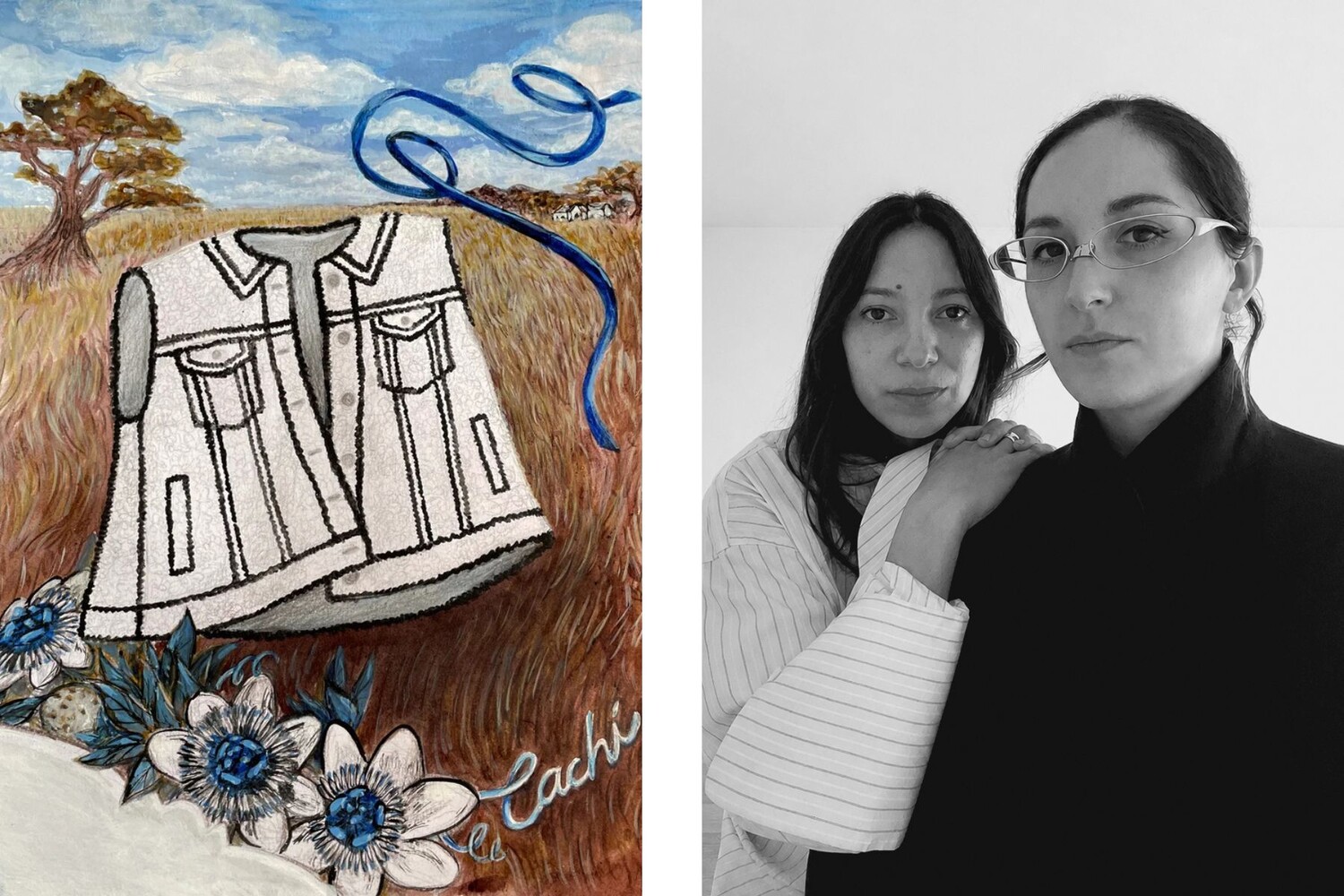
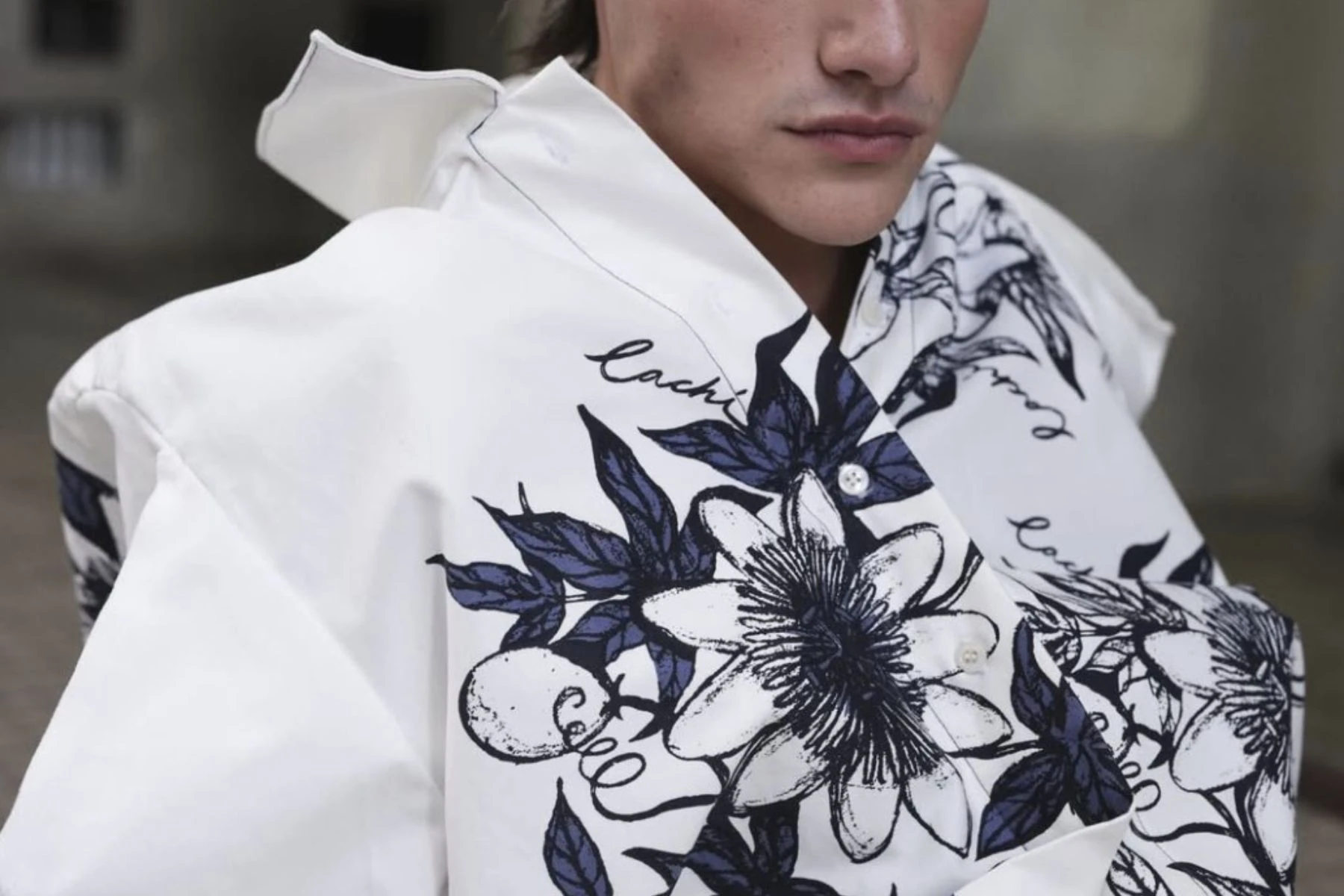
At CACHÍ, the collections tell stories of both memories and travels. With Memory is Home, Belén and Élise draw on their respective childhoods to create a wardrobe where the traditional clothing of Argentine gauchos meets Limoges porcelain. “We started with our childhood memories—everything that existed before we met—as if to share them with each other”, they explain. The layered elements of the gaucho costume thus take on ecru hues, while a floral motif combines the decorative motifs of French ceramics with the Argentine passion flower.
The next collection, El Campo, continues this dialogue by focusing on rural clothing designed first and foremost to accommodate the movements of daily life. Ponchos, scarves, and pants inspired by the gauchos sit alongside the French worker’s tank top, before giving way to the first blazer—a symbol of their arrival in Paris.
With La Boca, inspired by the Buenos Aires neighborhood and the elegance of tango dancers, the silhouettes take on a more commanding presence. Raised collars, widened cuffs, and structured volumes naturally encourage a straighter posture: “When people tried on the pieces, they stood up straighter”, the designers note with delight.
This evolution goes hand in hand with a deeper reflection on the men’s wardrobe. Originally unisex, CACHÍ now focuses on men’s essentials such as shirts, pants, and blazers. “We want to give the men’s silhouette more freedom. We want to keep the wardrobe essentials while introducing a few feminine touches. These are subtle touches to make the pieces easier to wear,” explain the designers.
Cut and fabric at the heart of the design
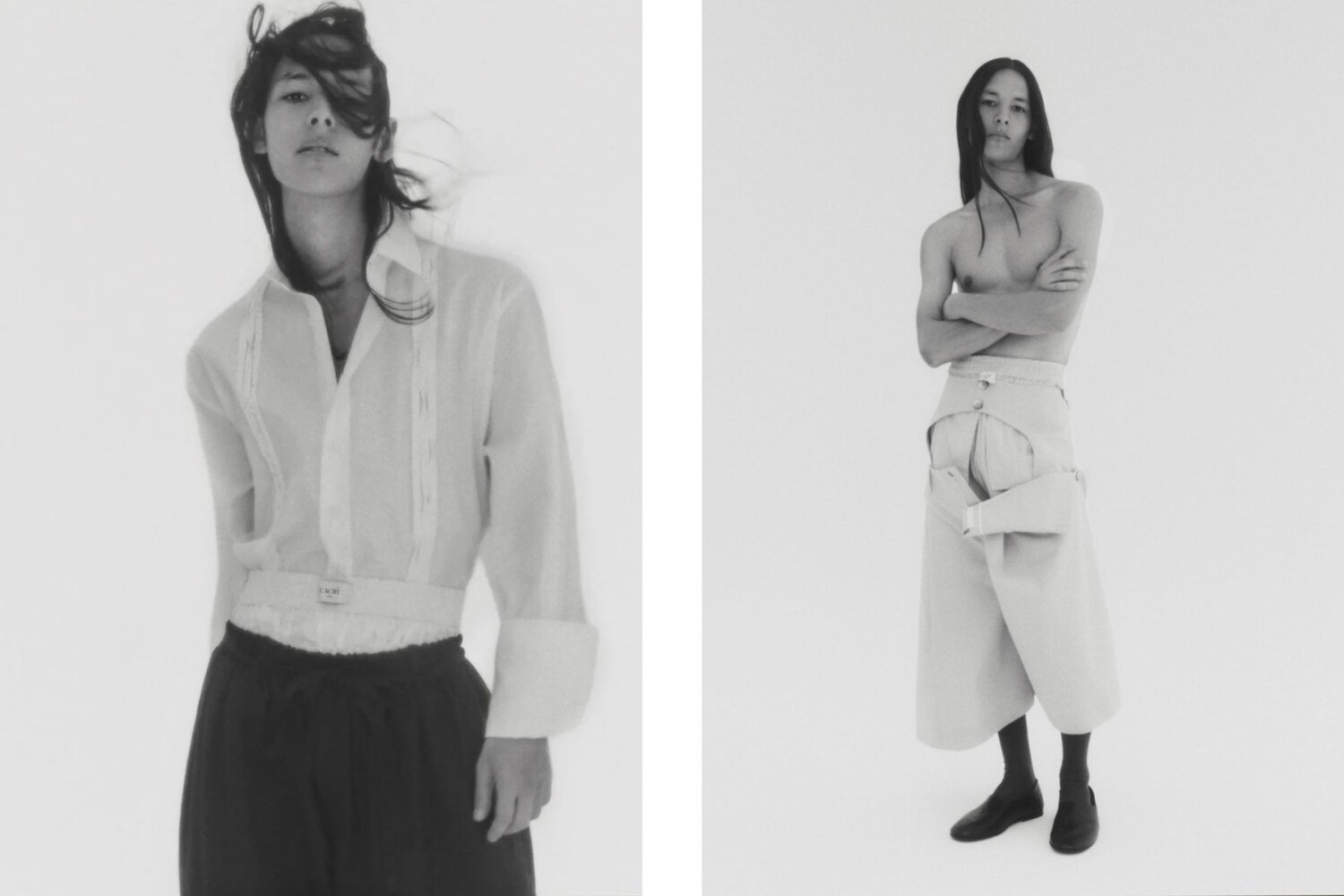 Photo credit: © Dani Bastidas Collection Caballeros CACHÍ">
Trained as fashion designers / technical fashion designers, Belén and Élise place particular importance on garment construction: “We start with volume and fabric. We focus our attention on the drape of the first prototype”. The shift from unisex to men’s wear also required them to revise all their patternmaking processes to better adapt the proportions to men’s body types.
Their work relies on details that are sometimes subtle—such as a misplaced pleat, an unusual sleeve length, or a subtly altered cut. “A touch of flair can even be found in the drape,” they summarize. This attention to detail truly comes into its own once the garment is worn, when the fabric flows with the wearer’s movement.
The designers favor natural fabrics, particularly wool, linen, cotton, and silk, as well as blends with unexpected effects, such as wool that mimics denim. They use fabrics from dead stock, particularly from Nona Source, as well as materials available through a stock service to ensure the continuity of certain styles.
To bring their designs to life, they collaborate with independent technical fashion designers and French workshops, including Valette Atelier, on the advice of the Maison du Savoir-Faire et de la Création, and Brocéliande Confection, which are involved in development and garment making. Production runs remain limited to a few dozen pieces or are made to order. “If we ask a factory to develop a piece, it makes sense to then entrust them with production”, they emphasize, committed to building ongoing collaborations with their partners.
Craftsmanship: Another Expression of CACHÍ
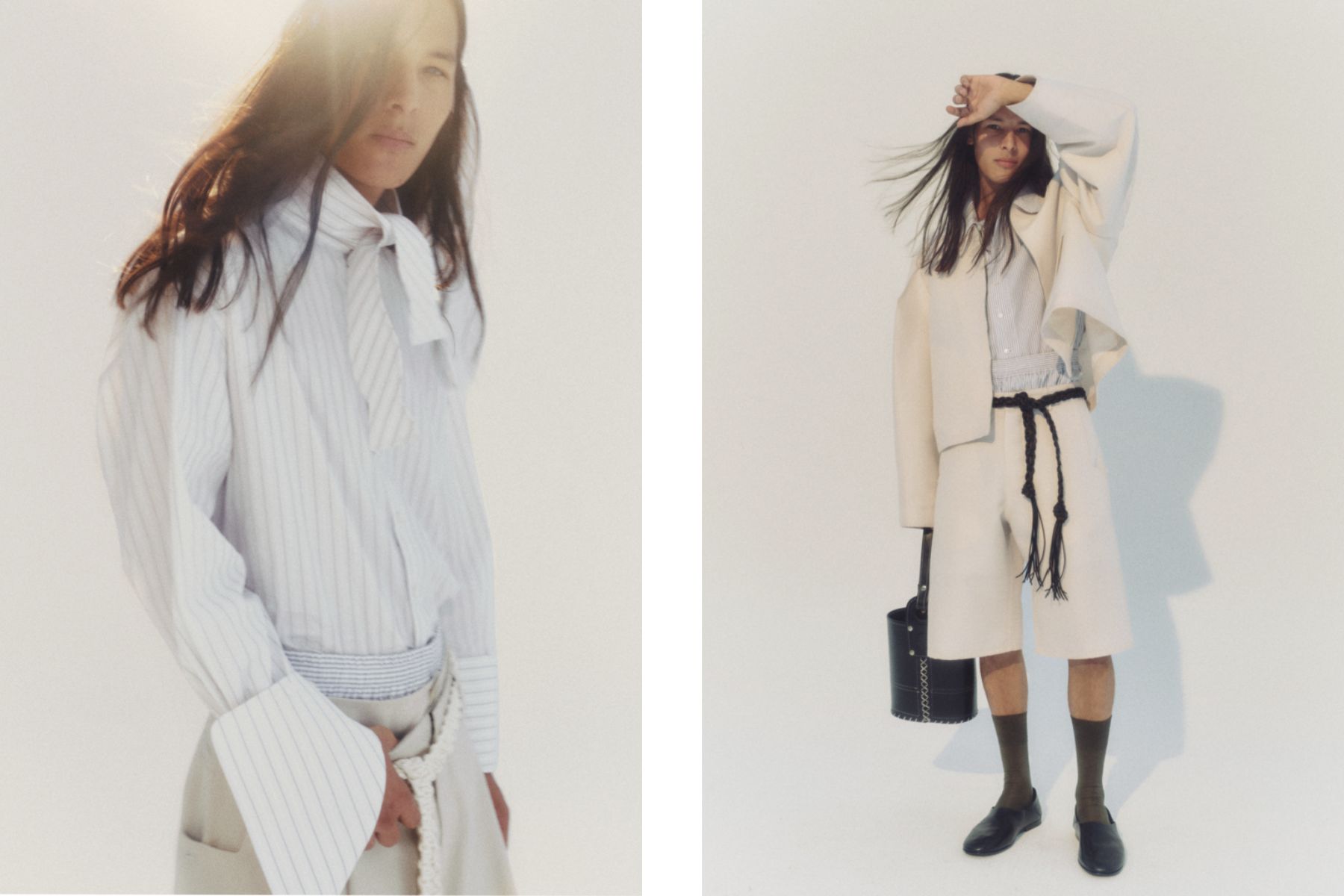 Photo credit: © Dani Bastidas Collection Caballeros CACHÍ">
Beyond garment making, CACHÍ collaborates with French and Argentine artisans to develop unique pieces where traditional techniques become true elements of design.
In France, the designers collaborate notably with Laurence Liard, an embroiderer trained at Maison Lesage, and Danièle Le Geval, a knitting specialist. Brooches, embroidery, and knitted pieces thus enrich the collections. Regarding Laurence Liard, the designers emphasize: “With all the methods and savoir-faire she possesses, she brings to life any idea we present to her”. The network of Ateliers de Paris network also fosters new collaborations, notably with Chloé Valorso, a jewelry artisan and metal sculptor, and Audrey Bigouin, a designer specializing in soft fabrics and leather, with whom they are developing scarves.
In Argentina, these collaborations also take on a family dimension. Belén’s mother and sister help create knitted and crocheted pieces. Her sister, in particular, practices punch needle, an embroidery technique traditionally used for rugs and decorative objects, which they’ve adapted for a sleeveless blazer and a pair of shorts. “We used this technique by hand on a garment, like a trompe-l’œil,” they explain.
Now distributed primarily in Asia—notably in Japan, China, and Taiwan—CACHÍ continues to grow while exploring new savoir-faire. For their Spring/Summer 2027 collection, Caballeros, the designers are delving deeper into macramé and crochet. They are also considering new collaborations in Argentina centered on alpaca, a metal alloy used in local crafts.
Thus, through a blend of French production and artisanal experimentation, CACHÍ is building a men’s wardrobe whose uniqueness stems as much from its cultural references as from the hands that shape it.