BURC AKYOL's fashion, an expression, a common body

In the midst of the frantic rhythm of the seasons, designer BURC AKYOL claims a different tempo: that of gesture and language. In his Parisian atelier, he champions tailoring of rare precision, accompanied by the suppleness of flou / soft dressmaking to conceive of clothing as an extension of the body. Each design is a space where tension and softness, desire and restraint, are woven together. For him, couture is not a fashion, but a way of inhabiting the world.
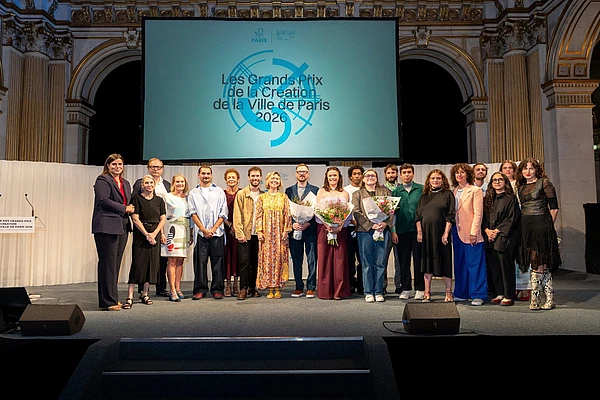
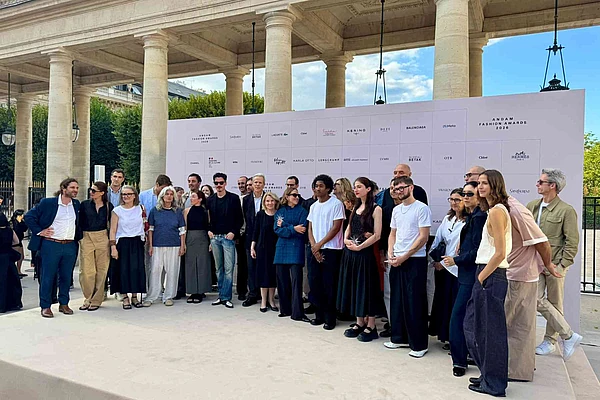
His fashion shows are conceived as narratives, and with COLL 05, "GÜLISTAN", Burc questions the place of each individual in the collective body. Behind the line of a blazer or the transparency of a muslin, we read a reflection on the link to the other. The result is a fashion that is intimate and committed, faithful to the sincerity of the "found self" rather than the seductiveness of the ephemeral. A requirement noticed: winner of the Fashion Trust Arabia Prize in 2022, finalist for the LVMH Prize in 2023 and winner of the Andam Pierre Bergé Prize in 2025, he is establishing himself as one of the most promising voices in Parisian fashion.
Learning the real

Before founding her brand in 2019, BURC AKYOL traversed the fashion world as one learns an art profession: patiently, in contact with talent. After graduating from the Chambre Syndicale de la Couture, he moved on to Dior during the John Galliano era, then to Balenciaga, Chevignon and Ungaro, where he met Esteban Cortázar and became his right-hand man for his eponymous brand for five years. From these years, he retains one principle: discipline. "You're not allowed to be self-indulgent when you're doing fashion", he says, "it's a job of endurance, rigor and rhythm"
This rigor he also owes to his childhood. His father, a journalist as well as a Tailoring, transformed the family bedroom into a workshop. Young Burc learned to sew, to patch and to love materials. "My father made his clothes from scraps of luxurious fabrics", he recalls. This artisanal gesture rooted in everyday life would become the bedrock of his inspiration. When he launched his own brand, he rediscovered this direct relationship with the hand, initiating a two-person workshop at home with a steady pace. "I grew up thinking that couture wasn't a profession," recounts, "and then I realized that it was my way of expressing myself."
It's from this anchorage that his vision is born: a blend of mastered tailoring and sensuality assumed through flou / soft dressmaking savoir-faire where the contrast of black and white with warm, bright colors invites itself. The hand guides the idea as much as it executes it. "I think you have to be as close and personal as possible to make a design, he points out. There's more room for personal expression than for yet another black skirt in the fashion world. It's all about bringing your extra soul and therefore your uniqueness to it." It's through the uniqueness of this wardrobe that BURC AKYOL appeals to a mostly international clientele, notably American, Korean and British.
Clothing, a place of connection

The relationship between design and fashion is at the heart of the BURC AKYOL system. 95% of his garments are produced in France, in workshops with which he has a relationship of trust, "I have a family relationship with the people in garment making, the pattern makers, the mechanics, who I know by their first name, he explains, it's not a name that motivates them to work with us [young designers], it's the affect around the garment."
This closeness is not just affective: it feeds the design itself. In direct exchange with the contract manufacturers, the designer explores other solutions, unexpected volumes, more instinctive cutting gestures. "There's a creativity in the exchange with the contract manufacturer", he says. For him, visiting the workshops, understanding their constraints, feeling the materials in the craftsmen's hands, is primordial."I don't understand how a designer can stay away from the workshops, he affirms.It's the place where you remember the reality of our professions: it's not all glitter. It's the place where I feel the best!"
This living link with garment making also enables him to champion a lucid approach to sustainability. He often works with Nona Source to reuse fabrics from Luxury houses, while stressing that "we mustn't replace one value chain with another. We must also preserve the French textile industry." BURC AKYOL doesn't design for the seasons, but for the long term. His collections are numbered and undated. Some pieces come back, reinterpreted, as in the logic of his collaboration with eBay Endless Runway, which allowed him to transform old looks to offer a new reading. "A past fashion show is not has-been, he says, we can breathe new life into it, give it new meaning."
From mud to rose

COLL 05, "GÜLISTAN", its fifth collection, takes its name from the poet Saadi's Golestan, literally "empire of roses". The text evokes the human solidarity, of an interdependent whole, that runs through the creator's work. For him, beauty only has value if it connects. "Clothing serves to shake hands with others", he confides. This reflection is rooted in his childhood memories: discovering the Traveller children welcomed into his school, then the Roma of Istanbul's Sulukule district, where he first perceived the power of raw assemblages of color. It's only at this point in the story that he evokes his Turkish origins, not as a banner but as a source of insight.
For all that, COLL 05, "GÜLISTAN" is not a collection about Turkey, or gypsies, or flowers. It's about living together: fear, generosity, pride, passion; everything that makes up human complexity. "Passion is integrity and resistance", he says. This duality is expressed in the silhouettes: sculpted tailoring, free draping, calculated slits. A wardrobe of conscious seduction, of "dragueurs", he says, who prefer to suggest rather than show.
With his hands marked by garment making, BURC AKYOL belongs to this generation of designers who reconcile fashion and reality. His clothes carry the memory of French savoir-faire, nourished by stories and encounters, but also of an imagination open to the world. In Gülistan, each piece says the same thing: that there is, in work well done, a form of love. And that this love, shared between the designer, the craftsman and the wearer, is part of the same body.