Upcycling plays an increasingly important role in fashion
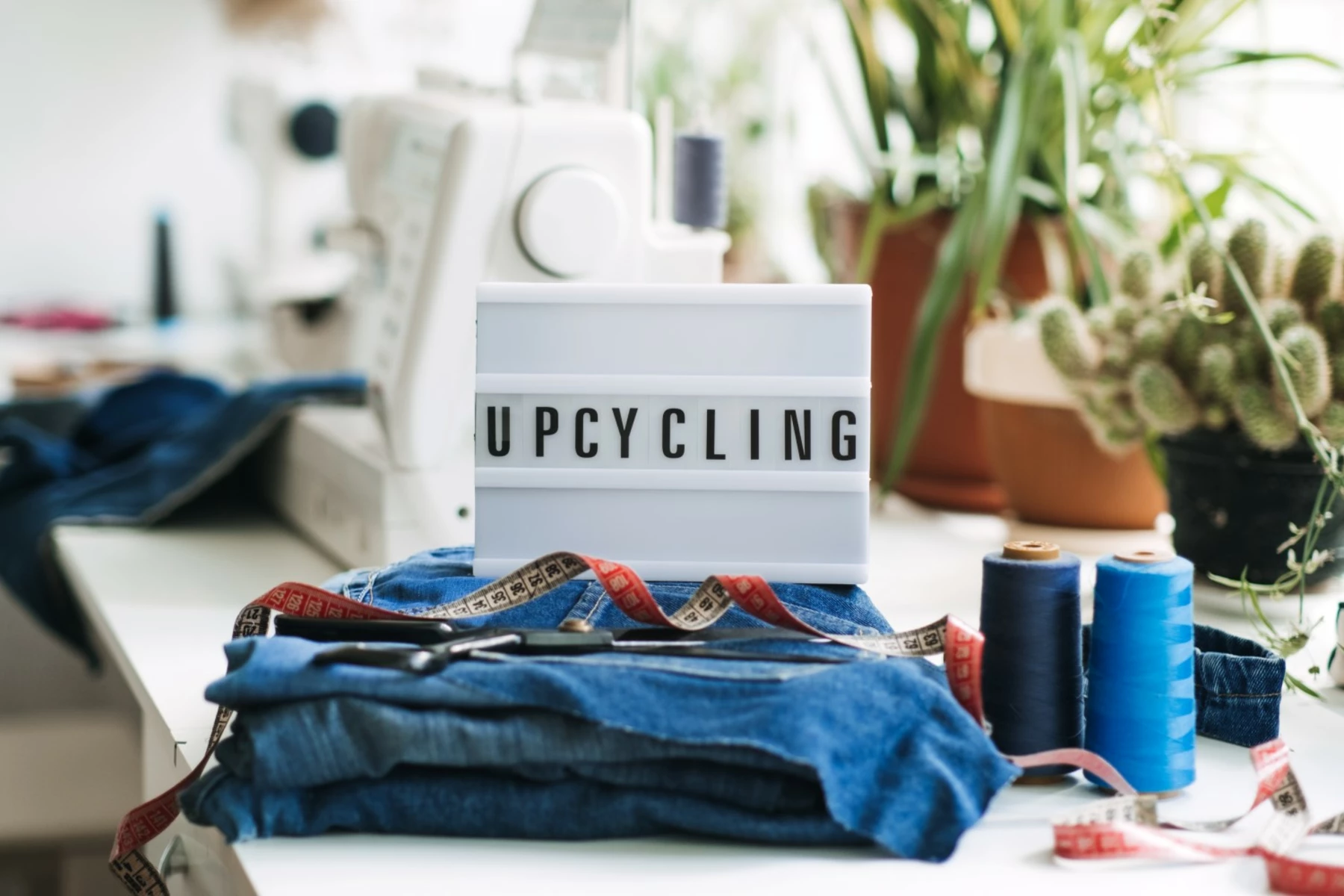
A virtuous and creative practice of the circular economy, Upcycling is taking shape in the ready-to-wear sector, with a growing number of brands, sourcing solutions and clothing manufacturers specializing in this area.
The circular economy is more topical than ever in fashion. According to Refashion, the eco-organization for the Textile Clothing, Household Linen and Footwear (TLC) Sector, 826,935 tonnes of these categories - around 12.2 kg per year and per inhabitant - were marketed in France in 2022. Yet only 260,403 tonnes were collected at end-of-use and 187,609 tonnes sorted, i.e. 23% of the total marketed!
However, legislation such as the AGEC law, which prohibits the destruction of unsold goods, encourages the creative and virtuous practice of Upcycling. Upcycling consists in "recovering materials or products no longer in use, and transforming them into materials or products of superior quality or utility " explains Refashion.
And in recent years, initiatives have been multiplying. Media designer Marine Serre was one of the pioneers of the movement. She has since been joined by other brands (such as Andrea Crews, Carbone 14, Resap and la Partisienne).
To bring their projects to fruition, players can rely on more structured dead stock sourcing. Two online platforms open to the ecosystem, Nona Source and l'Atelier des Matières, have thus been boosted in 2021 by LVMH and Chanel. Other initiatives are the work of young entrepreneurs, such as Uptrade, Adapta or Feat.coop...
STRUCTURES THAT SPECIALIZE
In response to the growing interest in upcycling and its specific features, other structures are being set up. A number of upcycling workshops, including 13 A'tipik, Lelabplus, Mode Estime, Labeli.D, Renaissance Project, la Fabrique de la Goutte d'Or and product development units such as L'Unique Façon. The latest workshop is that created by Relais Val de Seine.
Member of the Emmaüs movement, this pioneer of the circular economy and social integration (over 160 employees) has been developing a collection, sorting and recycling activity in Chanteloup-les-Vignes since 1994. Every day, the cooperative collects 25 tonnes of donated TLC from the western Paris region. Well-preserved items, around 8% of the total, are distributed via its nine thrift stores.
In late 2021, after a successful test with Andrea Crews, Relais Val de Seine launched the R Upcycling initiative. An idea "inspired by the fact that some clothes were recycled although in relatively good condition and still transformable, and that many of the candidates applying to Relais had sewing experience" explains Mirana Rakotoarisoa, project manager.
At R Upcycling (9 employees, 5 of whom are on integration schemes), the team sorts "quality clothing, unsaleable as it is", but "able to be repaired and upgraded through small transformations, for resale". R Upcycling in fact offers the complete resources of a garment making workshop. "While our employees are primarily seamstresses, they are also multi-skilled with a view to enhancing their skills," explains Mirana Rakotoarisoa. With some of them aiming to become patternmakers, I give them patternmaking and even Draping assignments, initially simple, then increasingly complex, to help them develop".
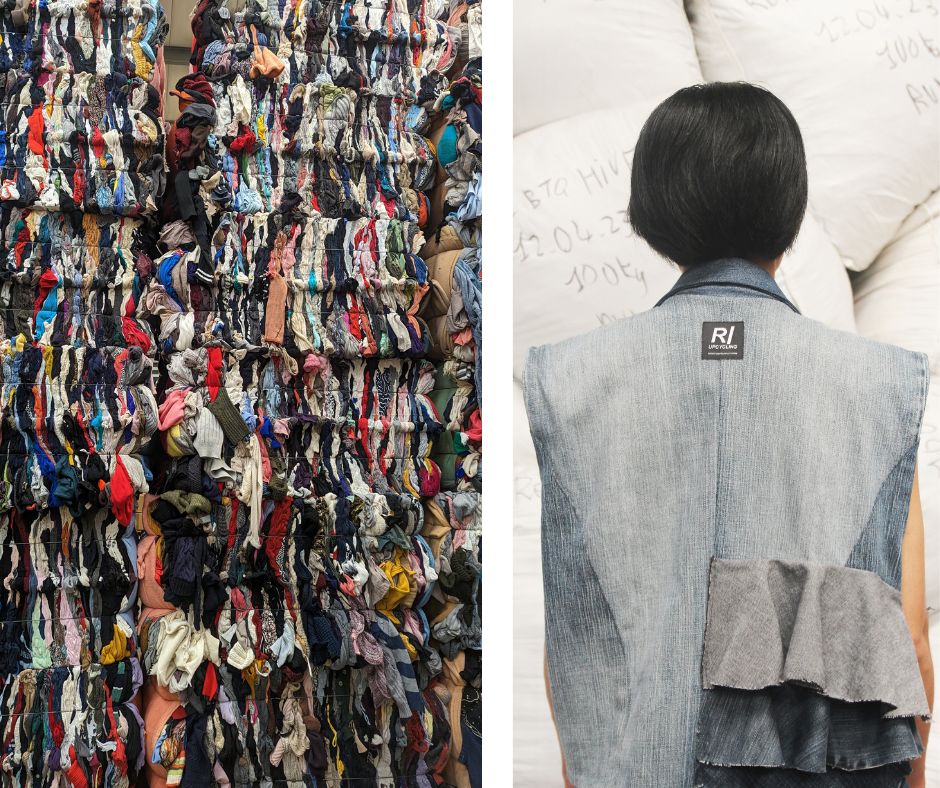
R Upcycling thus makes "quilted or patchworked garments". With prices "accessible for upcycling made in France, ranging from 15 euros for screen-printed T-shirts to 400 euros for more elaborate pieces."Since its inception, R Upcycling has recycled a ton of textile waste, carried out over 300 repairs and created 1,600 products (mixed ready-to-wear, textile accessories, jewelry, furniture).
However, it has yet to achieve economic equilibrium. Marketing the brand through its solidarity network and multi-brand stores such as Habit français and Emmaüs Campus has not yet enabled it to reach its financial target. To become self-sufficient in this area, R Upcycling has forged a dozen collaborations with players such as Emmaüs France (customization, via silk-screening, of second-hand tee shirts), Resap (transformation of jeans into computer covers), Charly et moi, the Monoprix Foundation, Accor Hotel...
"It takes a few years for an Upcycling brand to gain visibility and profitability", souls Mirana Rakotoarisoa, who hopes that the launch of her e-commerce site, "will facilitate the buying journey".
UPCYCLING IN SERIES
To take things a step further, Losanje is the first brand producing upcycled ready-to-wear (men's and women's) in batches (available in several sizes, colors...).
The co-founders, Simon Peyronnaud and Mathieu Khouri, both recent Sciences Po-Escp graduates, set up a product development unit and clothing manufacturer in Nevers, France, specialized in upcycling. When Losanje was designed in 2020, the duo came up against a major challenge: production, as the workshops they met didn't do upcycling. Yet Losanje's concept is precisely to repurpose, in the form of a men's or women's wardrobe, stocks of second-hand products that the brand sources from several sorting companies.
After launching their brand and selling several hundred products, the directors were contacted by companies looking to get into Upcycling. Losange transforms their unsold and/or second-hand finished products with a 360° project approach: design, product development unit, production...
"We have two typologies of projects: companies or local authorities who come to us with finished products at their disposal (second-hand or unsold), or companies who want to switch to Upcycling but haven't yet identified suitable deposits of finished products to recycle" says Simon Peyronnaud.
Simon Peyronnaud explains this craze by three reasons. "According to two 2019 studies (MC Kinsey and Ademe), Upcycling is the most eco-friendly production for clothing and accessories, with around 90% fewer CO2 emissions than making new items from virgin materials. Secondly, we offer relevant storytelling, upgrading what already exists while complying with legislation such as the AGEC law. Finally, Upcycling can be attractive in terms of pricing thanks to its industrialization". In fact, while "upcycling today is predominantly artisanal", the duo's plus was to position themselves "as the first player industrializing this production method thanks to automation tools".
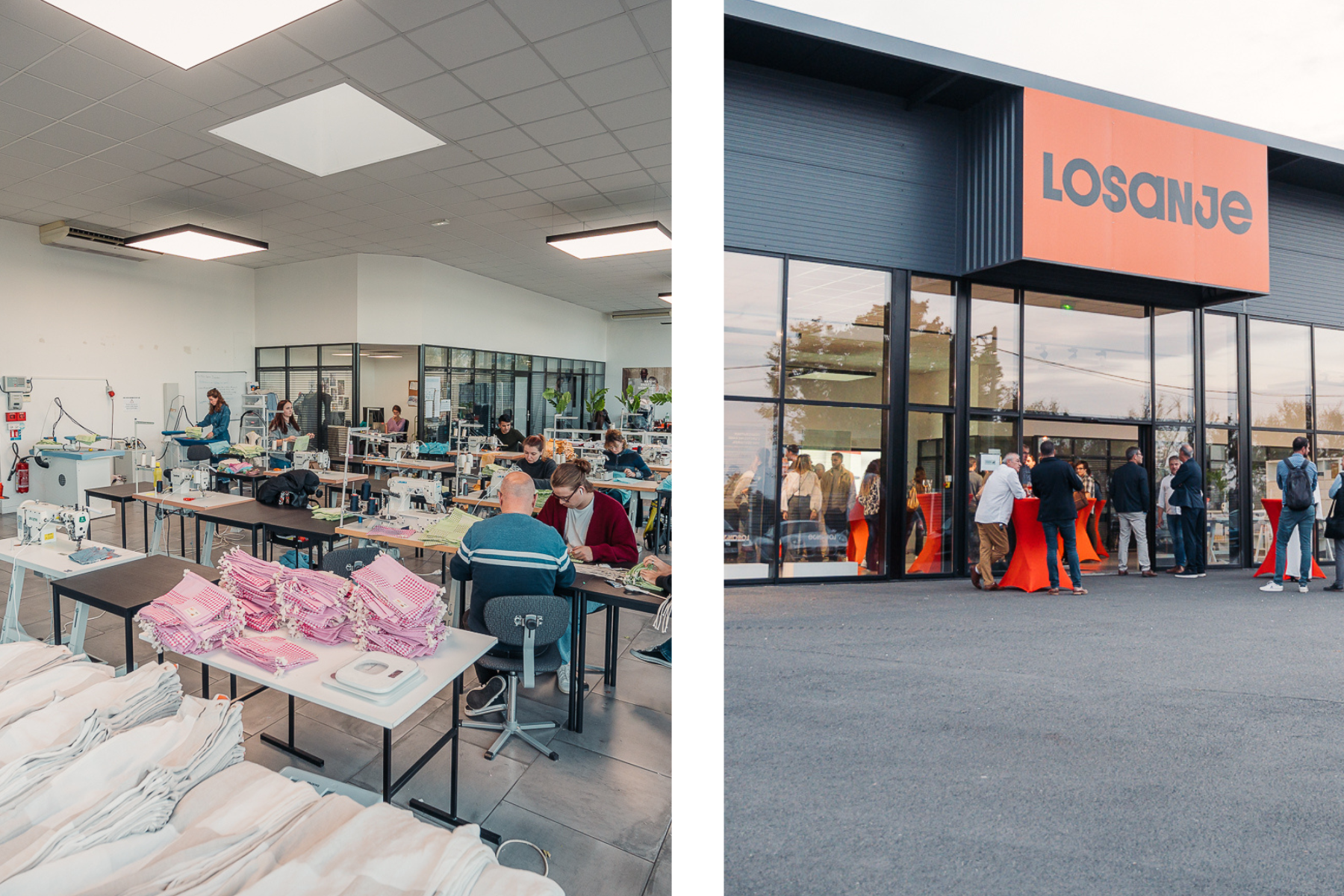
This disruptive strategy convinced numerous partners for a fund-raising of 2.5 million euros in April 2023. Losanje was thus able to develop a machine to automate-industrialize Upcycling, invest in new premises in Nevers and recruit. The company, which currently employs 20 people, three-quarters of them in production, plans to hire another ten or so in 2024! In 2023, most of its sales were generated via Upcycling projects for various players: major groups and luxury or fashion brands, events, local authorities...
"Our biggest challenge has been production and moving from artisanal to industrial. Today, our challenge is visibility. Upcycling is attractive for its ecological, economic and strategic aspects. Yet very few players are aware of an automation and industrialization solution" explains Simon Peyronnaud. The recent listing of Losanje's workshop on the Maison du Savoir-Faire et de la Création platform should help the cause.
For more information: