45 years of structured savoir-faire at LG Couture
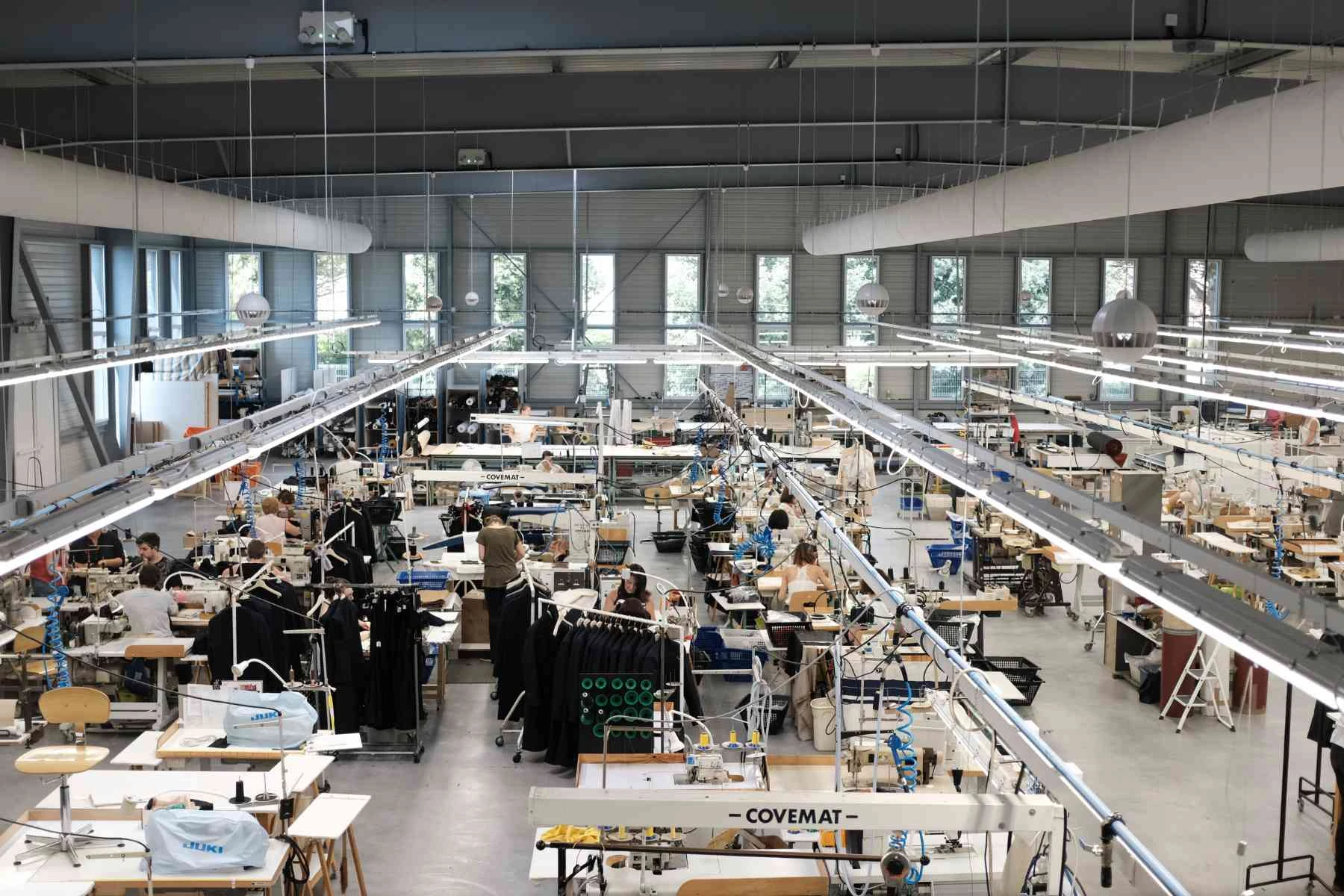
Founded in 1981 following the closure of a major garment manufacturer, LG Couture today specializes in the manufacture of structured garments for high-end customers and Luxury houses. Over more than forty years in business, the company has undergone several revival phases, enabling it to adapt its positioning in a context marked by profound changes in the apparel industry.
Luc Bethus took over the company in 2002, at a pivotal moment. Alongside Gérard Poiraudeau, he set about reviving a weakened structure, whose initials, LG, give the company its name. Since 2007, Jérôme Poiraudeau has taken over from his father and co-manages the workshop. Together, they structure the business around demanding production management and accompany a gradual rise in technicality, supported by the development of team skills and a constant focus on quality.
From a "hemorrhage of customers" to moving upmarket
 © LG Couture">
In its early days, the structure worked for mid-range ready-to-wear brands, in a context where garment making was still largely rooted in the region. Offshoring gradually unbalanced this ecosystem, causing "a hemorrhage of customers"and a rapid contraction of its historic market.
Faced with this reality, it had to find new markets, meet new demands and accept a change in positioning. "I've always managed to find customers who have led us towards luxury", testifies Luc Bethus for whom this shift redefines the production model with an increase in technical standards, an adjustment in volumes and a refocusing on quality.
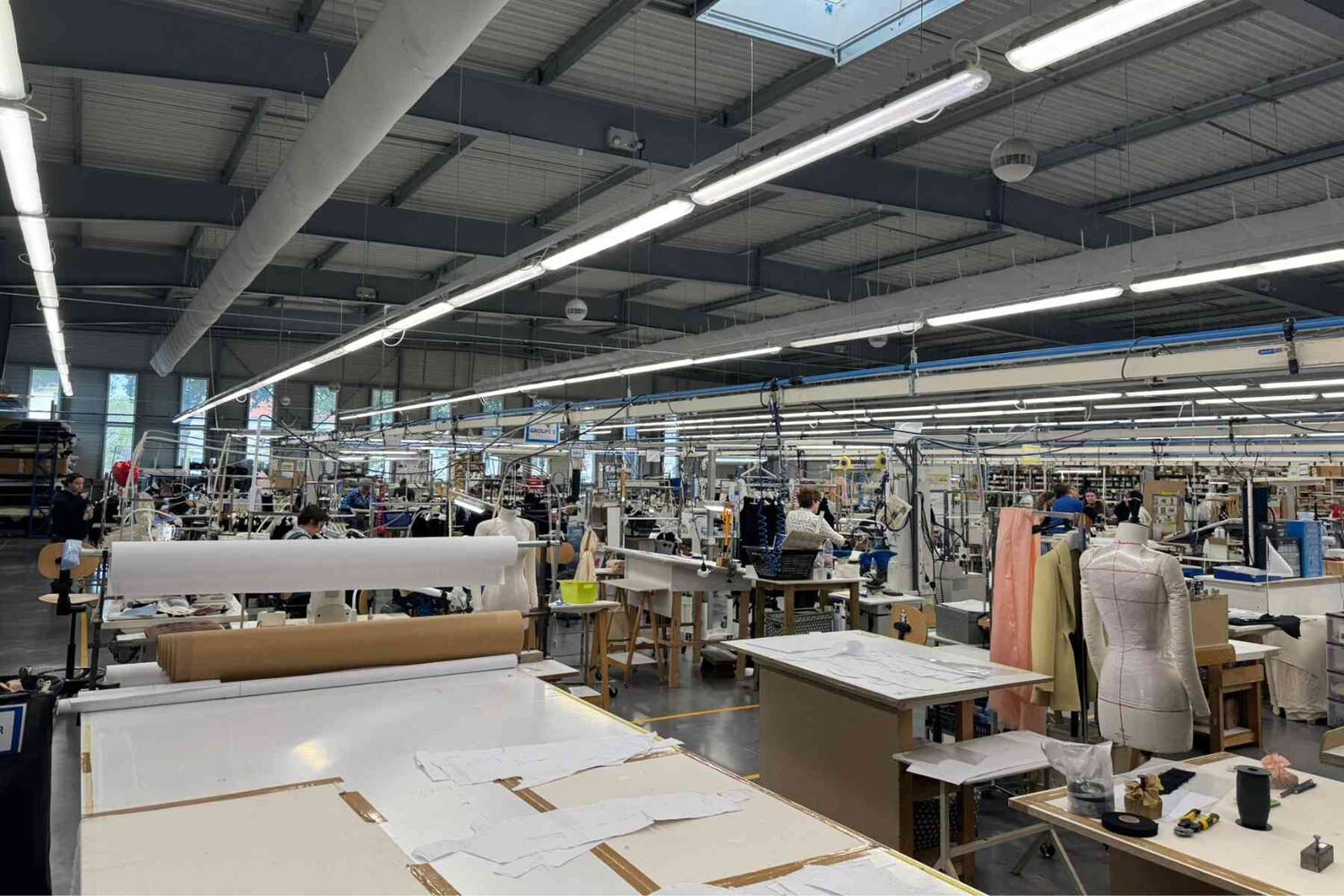
Today, LG Couture employs some sixty people and marks its specialization in garment making structured warp and weft: blazers, coats, dresses or skirts. "We don't have a product development unit, we sew here", explains Luc Bethus. It's an assertive commitment that anchors the company's role as a contract manufacturer serving customers with their own product development.
The production framework is based on three poles: garment making (Lectra, quilting, thermobonding), stitching (three garment making groups and a prototype group) and finishing (inspection, ironing, packaging). The work is carried out on the assembly line, with a logic of progressive versatility. "Operators start with simple operations, then move on to more complex assembly stations", explains Luc Bethus. This progression makes it possible to adapt gestures to the constraints of the materials, the principle remaining the same, but the rendering varying according to the fabrics.
A savoir-faire between craft and industry
 © LG Couture">
"We are industrial craftsmen", sums up Luc Bethus. It's a formula that expresses the balance of LG Couture, an organization designed for batches based on technical gestures that take time to master and can only be mastered by the individual.
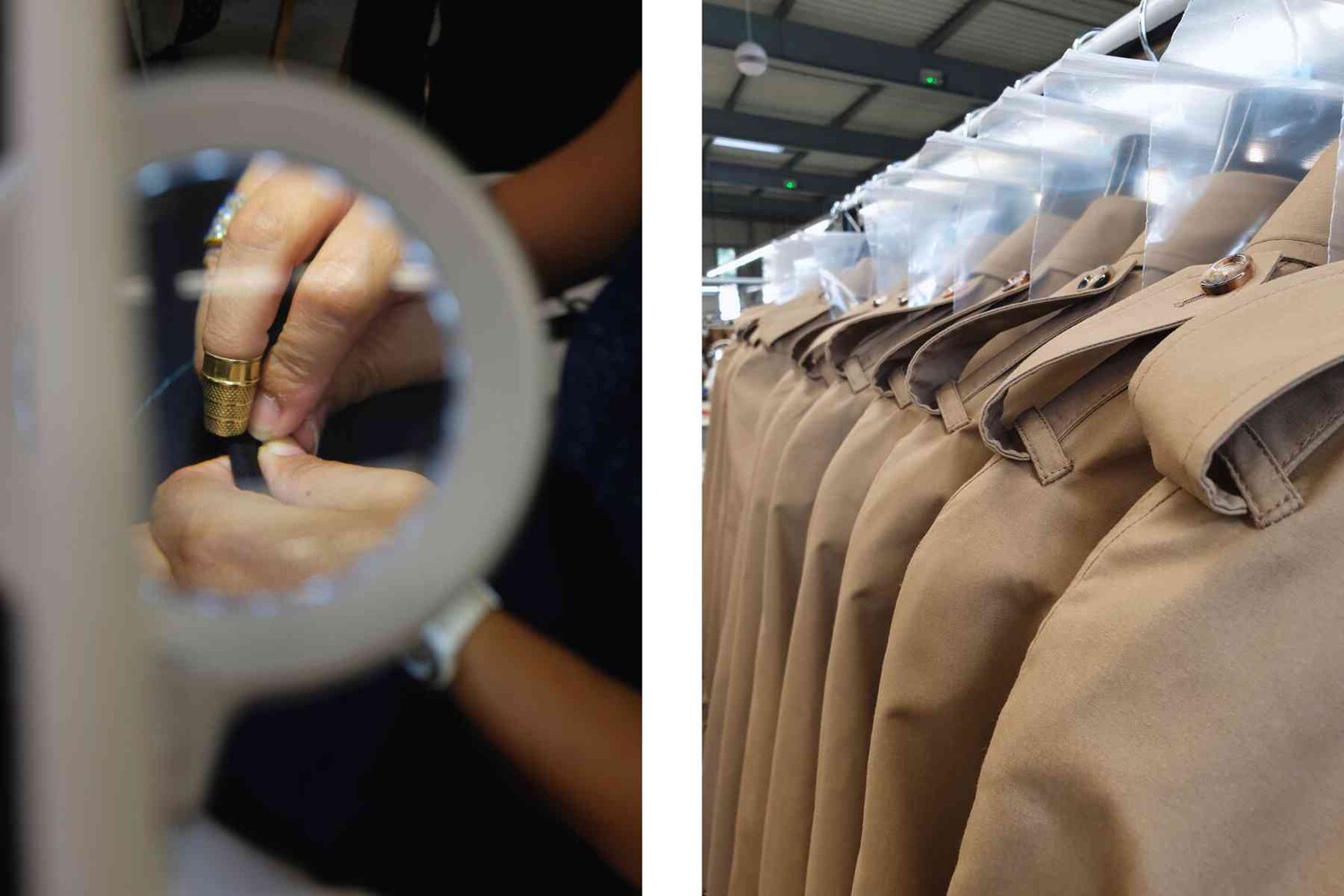
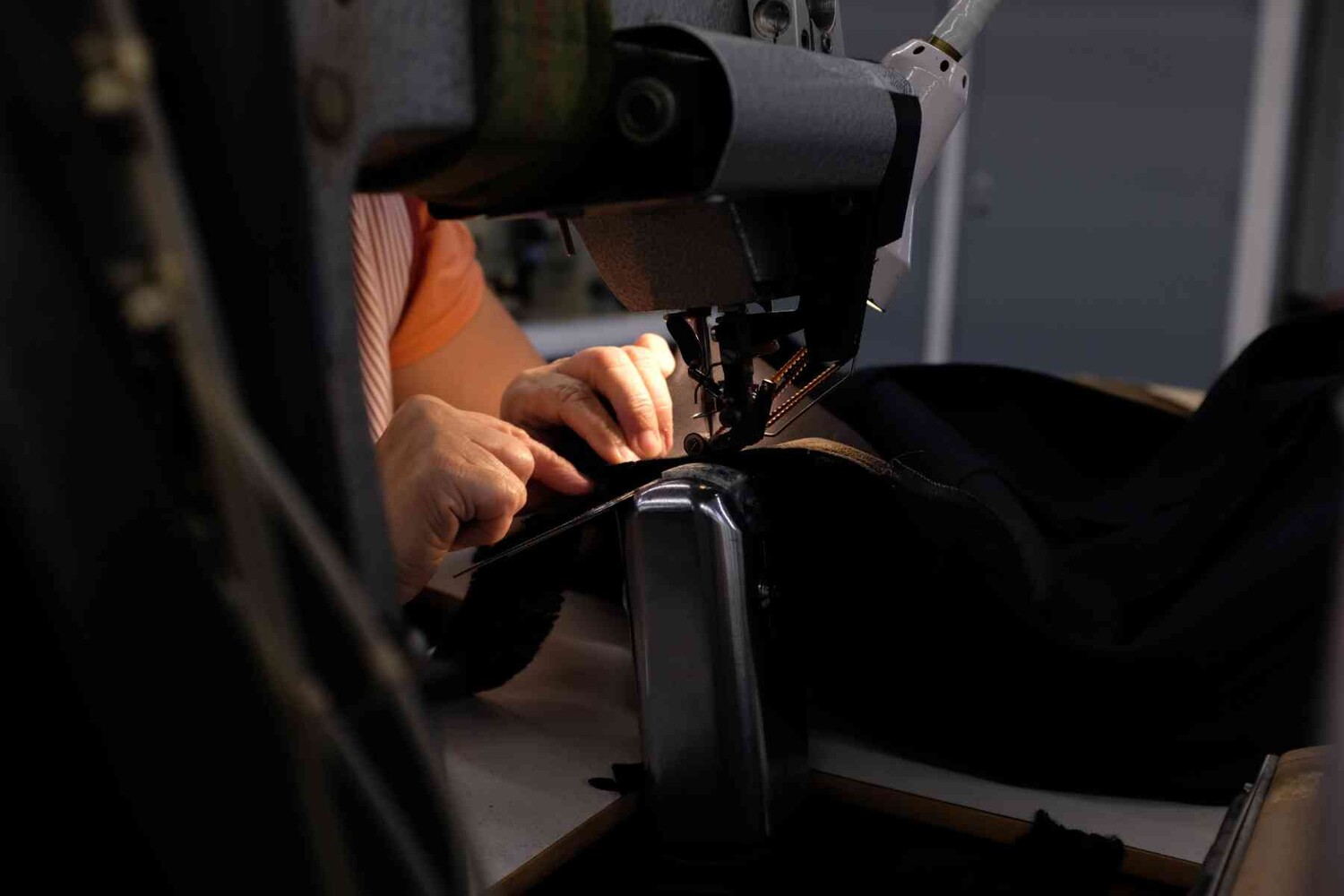
This reality has become more pronounced as products have become more complex. "The proportion of hand stitches has increased significantly", observes the manager. Some parts thus require a considerable amount of time: "we have 8 to 9 people on hand stitch and sometimes there are 5 hours of hand stitch on a dress", he expresses. The increased use of hand-stitching illustrates the high standards expected of our products. LG Couture has developed expertise in a range of specific savoir-faire: double-sided stitching, sleeve assembly, breastplate work and mixed-material assembly, notably with leather. Beaded stitch, used to glaze linings, is also one of the techniques used.
These high standards require qualified profiles from the moment they join the company. LG Couture recruits people who have been trained in sewing, who have mastered industrial machinery, and who are capable of evolving in an environment where precision is required to the millimetre.
Transmitting savoir-faire is a central challenge. Today, apprenticeships are mainly carried out in-house, directly at the workstation, with a gradual rise to mastery over time. The workshop is also seeking to formalize these gestures by documenting them, while underlining the limits of this exercise: "it would take a full-time person to film and archive". This approach responds to a major issue, that of the sustainability of skills in a context where their acquisition may require five to six years.
A rigorous organization around quality
 © LG Couture">
At LG Couture, the high standards we set for our products are underpinned by a flow structure designed to secure each manufacturing stage. From receipt of materials to final packaging, quality control is integrated throughout the process. "Our first criterion is quality, with constant self-checking of our work. The second criterion is productivity, to keep pace with the seasons", stresses Luc Bethus.
Production management also relies on the management of product-related exchanges. Tracking charts, objectives and regular updates enable us to continuously adjust flows and ensure effective coordination between teams. This approach, derived from Lean Management, aims to reconcile work clarity and operational performance.
Beyond production management, the company pays particular attention to working conditions and environmental impact. The manager of the GOTS-certified workshop declares: "we're at 98% recycling. Sorting is very important in the workshop". Devices are also being deployed to prevent musculoskeletal disorders (perforator, cushion, compression glove...).
Thus, beyond the processes it is a philosophy that guides the company: "to do very well in a minimum of time while enjoying the practice of its savoir-faire". LG Couture illustrates an organization where technical demands, batch production and artisanal gestures coexist on a daily basis.
To find out more, discover the LG Couture company fact sheet.