Fashion Estime: creating clothes, building lives
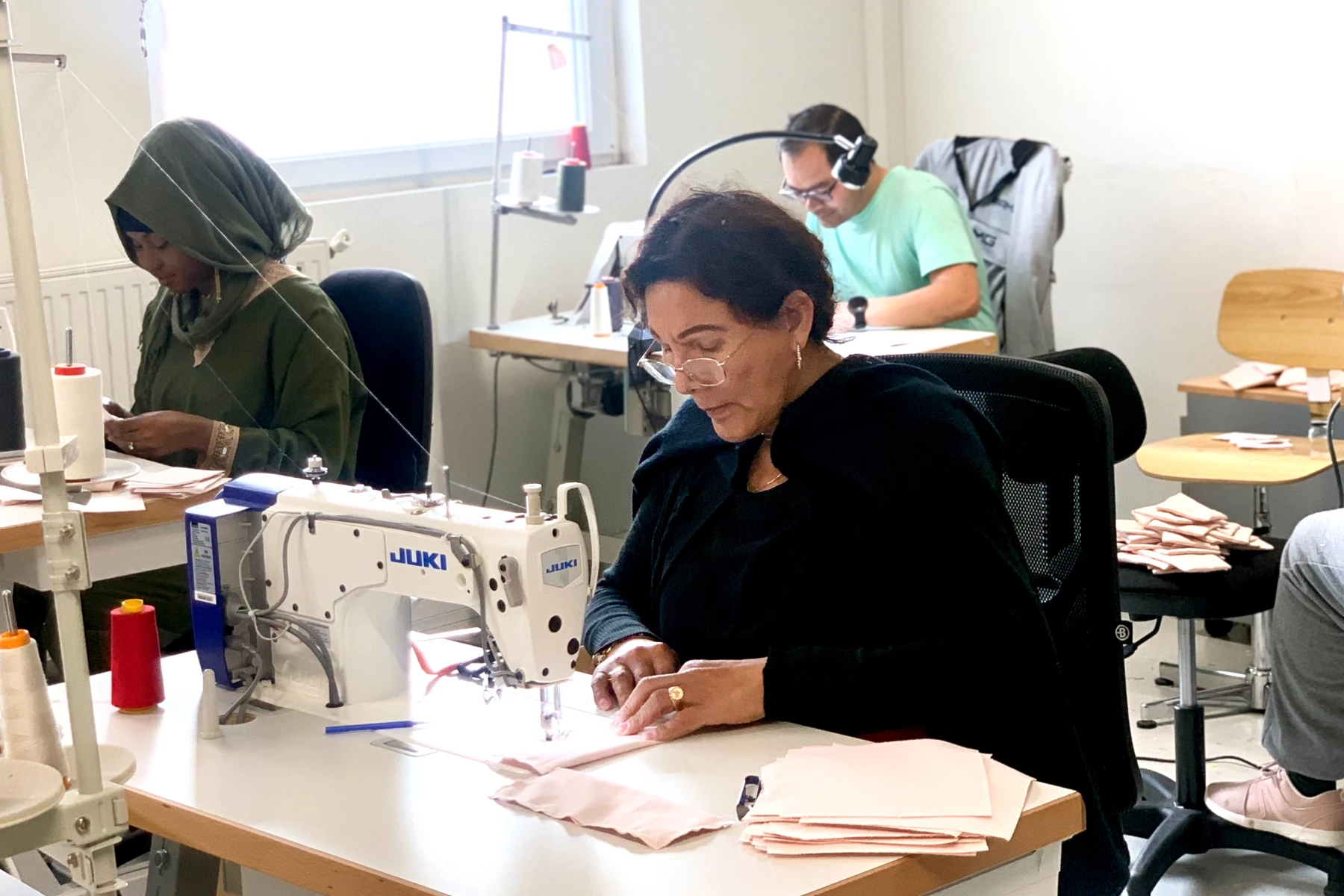
Visit the Mode Estime workshop, a social economy association created in 2011 by Alice Merle, which aims to help vulnerable people regain their self-esteem through textile design and sewing. Mathilde Coin, the association's communications manager, explains its missions, as well as the projects set up to support social and professional integration.
The essence of Mode Estime lies in two major axes: the quest for self-esteem through the design of clothes adapted to each morphology, and the learning of textile savoir-faire to reveal each person's potential. Thus, "the association's missions revolve around work integration, participation in the development of an eco-responsible and solidarity-based textile sector, and finally access to fashion for all and sundry"explains Mathilde Coin.
Integration through sewing
In 2014, Mode Estime created the integration workshop, which employs 21 people far from employment, in physically, psychologically and/or socially vulnerable situations. "When recruiting, we make sure that the career path at Fashion Estime makes sense and that the person does indeed come under the heading of integration". The workshop is 70% state-supported, financed by various national, regional and European grants. The remaining 30% is self-financed.
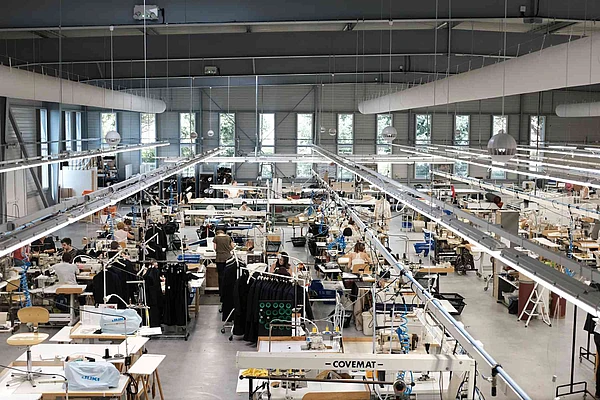
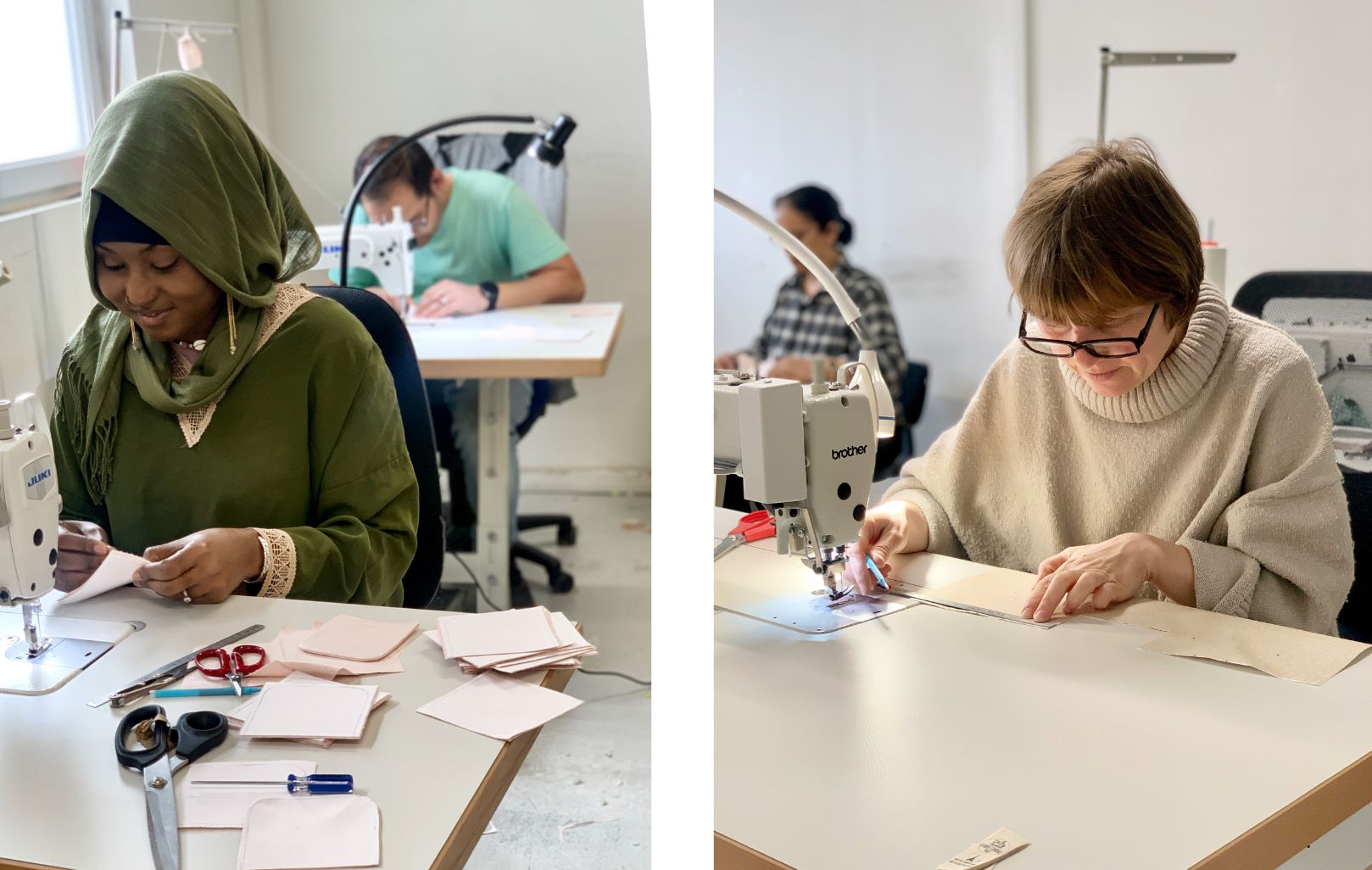
The work-integration workshop is mainly specialized in garment making, but aims to be versatile to meet a variety of needs. To this end, two workshops have been set up: "L'atelier solidaire", which is the first point of entry to Mode Estime and employs 13 people. Then the "Labo", which is designed to welcome profiles with a professional project in sewing, which we have validated and whose skills we have recognized. They work more on ready-to-wear or on productions that are a little more technical" explains Mathilde Coin.
 ©Mode Estime">
Accompaniment and Training
The organization of the integration worksite workshop involves a balance between production time and socio-professional accompaniment time for people in integration. "We have a vocational integration advisor who accompanies them throughout their journey to develop a professional project. We also help them to overcome the obstacles to employment, which can be related to housing, childcare..." Fixed-term integration contracts (CDDI) last a maximum of two years.
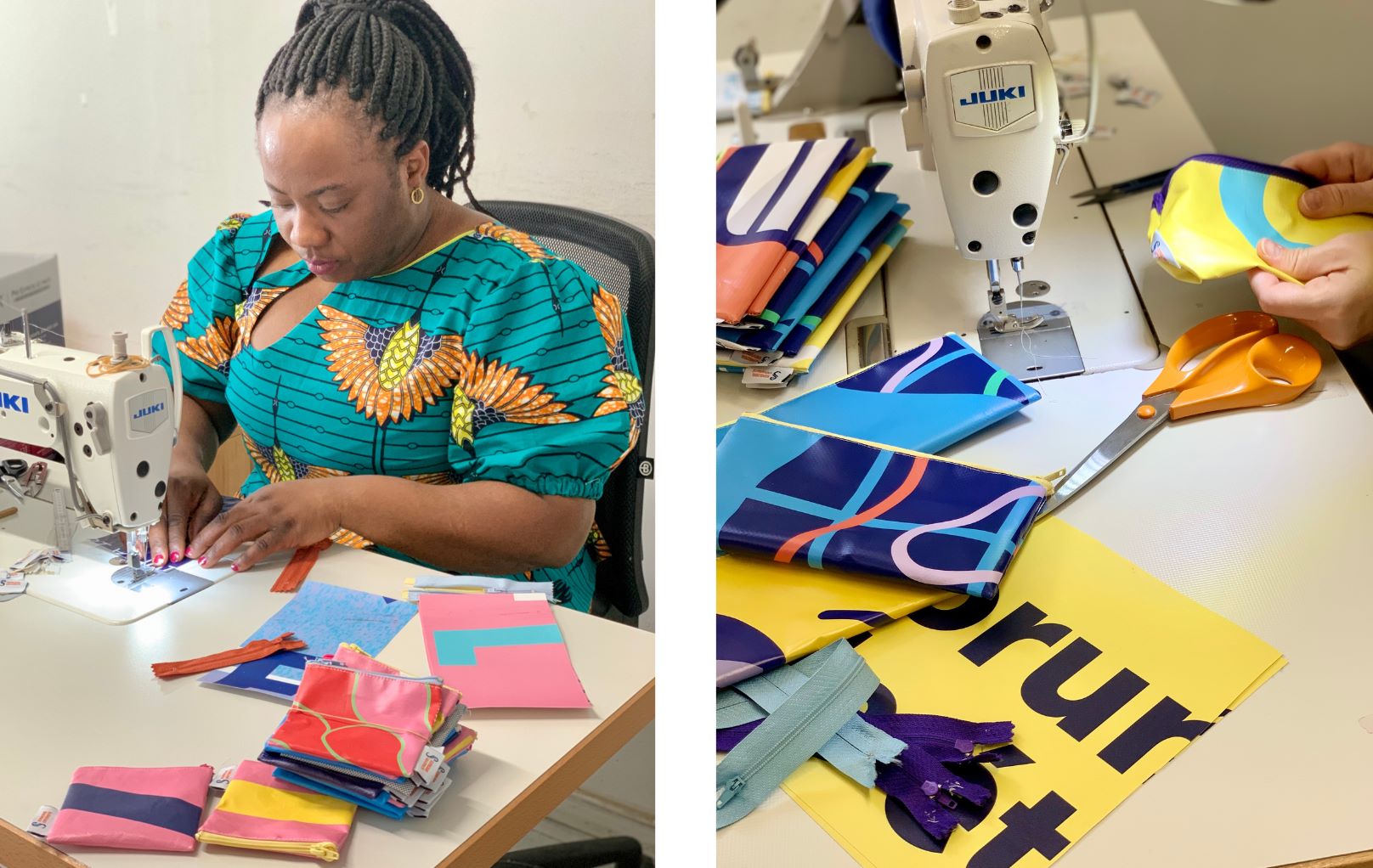
Mode Estime is also focusing on training, recently becoming a Qualiopi-certified training center for qualification Preparation for the CQP Machine Operator. "The special feature of this training is that there is a period of on-the-job training, during which employees can be trained in specific singular savoir-faire. The first session has already seen five successes out of eight, with a variety of outlets, including a permanent contract, two fixed-term contracts and an entry into training at the IFM" explains Mathilde Coin.
 ©Mode Estime">
Projects that make sense
The selection of projects for which Mode Estime works, is based on various criteria such as the complexity of the order, deadlines, approach and brand values.
"Generally we try to have projects that are already well advanced, but sometimes we have projects that have just started. The important thing is to have the technical file or at least a photo of the design and the prototype, after which we redo a head of batches."
The association works with around forty different customers every year, around twenty of whom are regular customers. "We work with small designers as well as established companies and sometimes local authorities."
The relationship of trust established with certain customers enables fruitful collaborations, where mutual understanding facilitates the realization of projects adapted to the workshop's skills. "For example, we have a customer with whom we've been working for several seasons, and she adapts her products to our skills and machines. We work together to design the product, making adjustments according to its complexity"Precises Mathilde Coin.
With a view to the future, Mode Estime has plans for expansion in Lyon, including the development of its product development unit and its new adapted fashion brand: Hormê. A brand of semi-measured clothing adapted to everyone "this can be linked to hospitalization, a handicap, a pathology, or even a morphology outside the norms of ready-to-wear". Mode Estime also wants to diversify its training offer and enhance the often under-valued savoir-faire among people in integration, thus helping to bridge the gap between recruitment needs and people far removed from these professional opportunities. "We realize that there is a huge amount of hidden savoir-faire among these people, which may be in the realm of experience or domesticity, and which is not detected as a professional strength. At Mode Estime, as in all the integration workshops, we need to identify these savoir-faire and encourage them to develop into professional skills. There's a need for recruitment in the industry, and people who come under the integration scheme often don't have access to these spheres, so our role is to make the link between these 2 worlds."
The Mode Estime association thus weaves powerful links between couture and social integration. Beyond garment making, it awakens the self-esteem and potential of each individual, paving the way for a more inclusive fashion industry accessible to all.
To find out more or support the association: https://www.modeestime.fr