Manufactures de Tricots Jean Ruiz: one knit, workshops, one vision
Garment making knits in France is not based on a single design. Between volumes, technicality and product development, the industrial realities are multiple. The group led by Karine Renouil-Tiberghien and Arnaud de Belabre is built on this complementarity.
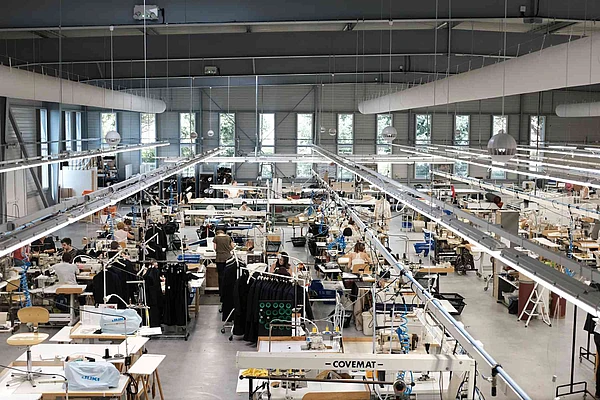
In Roanne, Manufacture de Tricots Jean Ruiz works with technical knits and medium-to-high-end products. In Sainte-Agathe-la-Bouteresse, the Manufacture de Layette et Tricots Techniques produces volume knitwear and technical knitwear. Two workshops, two rhythms, but the same direction to build an industrial tool capable of covering the whole chain, from development to production, with the support of the Démaillé workshop. "The mission we have collectively set ourselves is to reknit in France and redevelop the savoir-faire around knits. Each project proposed to us is analyzed using this single filter: does it fit into our mission or not?", expresses Karine Renouil-Tiberghien, co-director of the group.
The construction of a complementary group
La Manufacture de Layette et Tricots Techniques, draws its roots from a layette business developed as early as the 1920s. "At the time, production was organized between the workshop and a part made up in the village, sometimes directly in the homes of local residents", recounts site manager Benoît Mus. The relocation phase of the 80s pushed the workshop to reorient itself towards technical and medical knitwear, which fueled it until the takeover in 2020, when "we had to put the whole product development part back in place: grading, technical design, cutting tables... but also manage the 17 retirements in one year", he explains.
The Manufacture de Tricots Jean Ruiz is following a different trajectory. Created in the 1980s, it enjoyed a period of high activity with almost 250 people in the workshop before declining. Taken over in 2018, it is starting from a reduced workforce of "eight people at the takeover to around thirty today", explains Florence Desseignet, who has been with the company since 1993 and is now site manager.
The group is gradually expanding, with a restructuring of the workshops and the recent creation of the Démaillé workshop, a dedicated product development unit that "focuses on luxury fine-tuning and young designers", Florence Desseignet points out. Today, this set-up covers a broad spectrum, from large batches to technical pieces, from accessible products to more cutting-edge developments.
A wallet of proprietary brands completes the manufacturing activity. Griffon, which will be taken over in 2023 with the same teams, Pipolaki, which specializes in winter accessories, and La Manufacture de Layette, which is dedicated to layette and has existed since the beginnings of the eponymous workshop, will enhance the value of the workshops' savoir-faire while securing part of the business. Through these brands, the Group also tests its production capacities in real-life conditions, from product development to market launch. This logic is continued by Cesari, a more upmarket brand positioned in the baby range, which explores complementary segments, including warp and weft. Note that in the sales outlet, adjacent to the Jean Ruiz workshop, the offer is complemented by products from other brands to provide customers with a complete wardrobe.
Different ways of knitting
In Roanne, the Manufacture de Tricots Jean Ruiz relies on two main techniques: "this workshop specializes in working with noble and therefore expensive materials, it knits essentially with techniques that allow no material to be lost: form knitting (fully fashioned) then Linking knitwear or 3D knitting (integral)", explains Karine Renouil-Tiberghien.
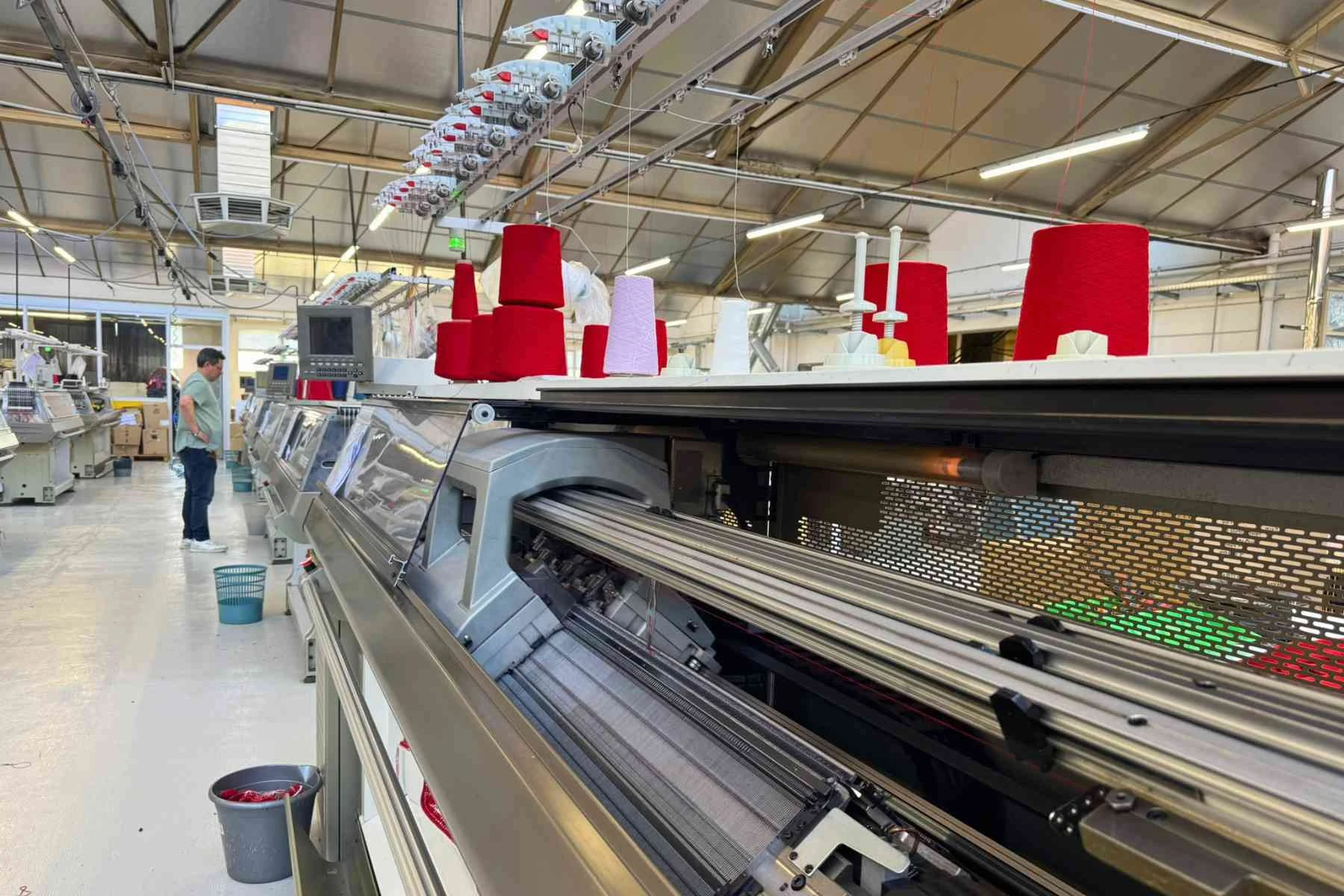
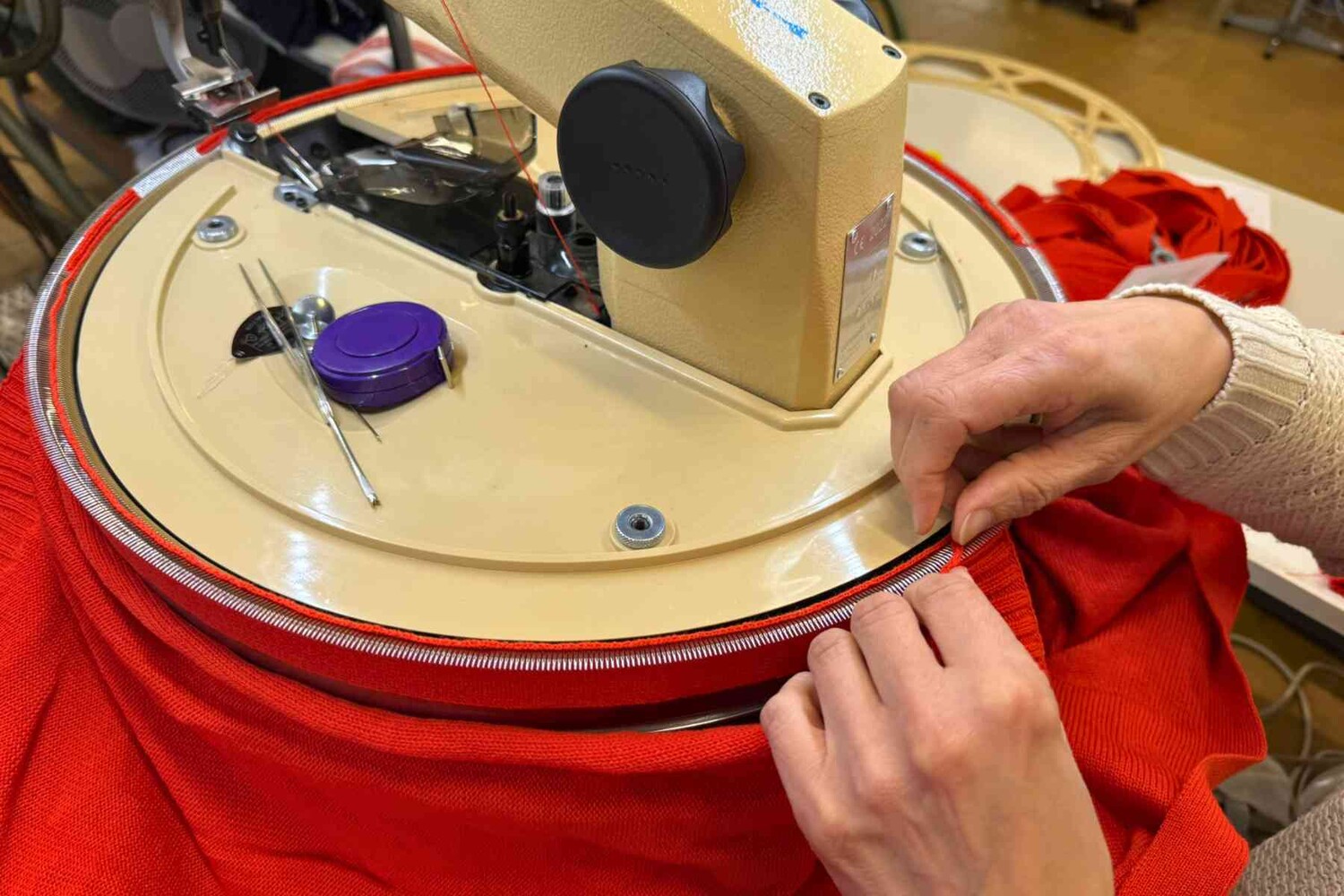
The first involves knitting each garment element (front, back, sleeves) directly to the right dimensions."We knit panels with precise sizes, then assemble", explains Florence Desseignet. Linking knitwear is a slow, precise operation: "one stitch, one punch". It opens up technical possibilities, such as placed jacquard or intarsia, where patterns are knitted without floating threads. At the same time, the workshop is developing fully fashioned knitting (seamless) where the garment emerges virtually finished from the machine, with no assembly seams, only hand finishing. It reduces handling and waste, which is why the workshop tends to do more of it, even if it takes longer and is therefore more costly. These techniques rely on precise machinery, notably Shima Seiki machines, capable of working in different gauges. The gauge, representing the number of needles per inch, determines the fineness of the knits: "we go from gauge 3 to 12, and up to 14 in full". This amplitude enables us to produce thick pieces as well as very fine knits with controlled rendering.
At Sainte-Agathe-la-Bouteresse, the logic is different. The Manufacture works primarily in volume, with an organization designed to produce in larger quantities. "La Manufacture de Layette et Tricots techniques knits more in cotton or less expensive materials, with the cut and sew technique: we knit faster, then cut", explains Karine Renouil-Tiberghien. "It is also equipped with flat knitting machines that enable knitting of technical products for the medical or automotive industries." The workshop uses panel knitting and is developing a little fully fashioned knitting, without resorting to full in the same way, in order to optimize cadences while retaining flexibility. Our fleet of some forty machines can produce up to 50,000 pieces for layette and 20,000 to 30,000 for adult clothing. In addition, specific products such as snow socks are produced all year round. This capacity is matched by a high level of responsiveness, with restocking within a fortnight, bringing the workshop closer to a quasi logistical logic, particularly for mass retailers.
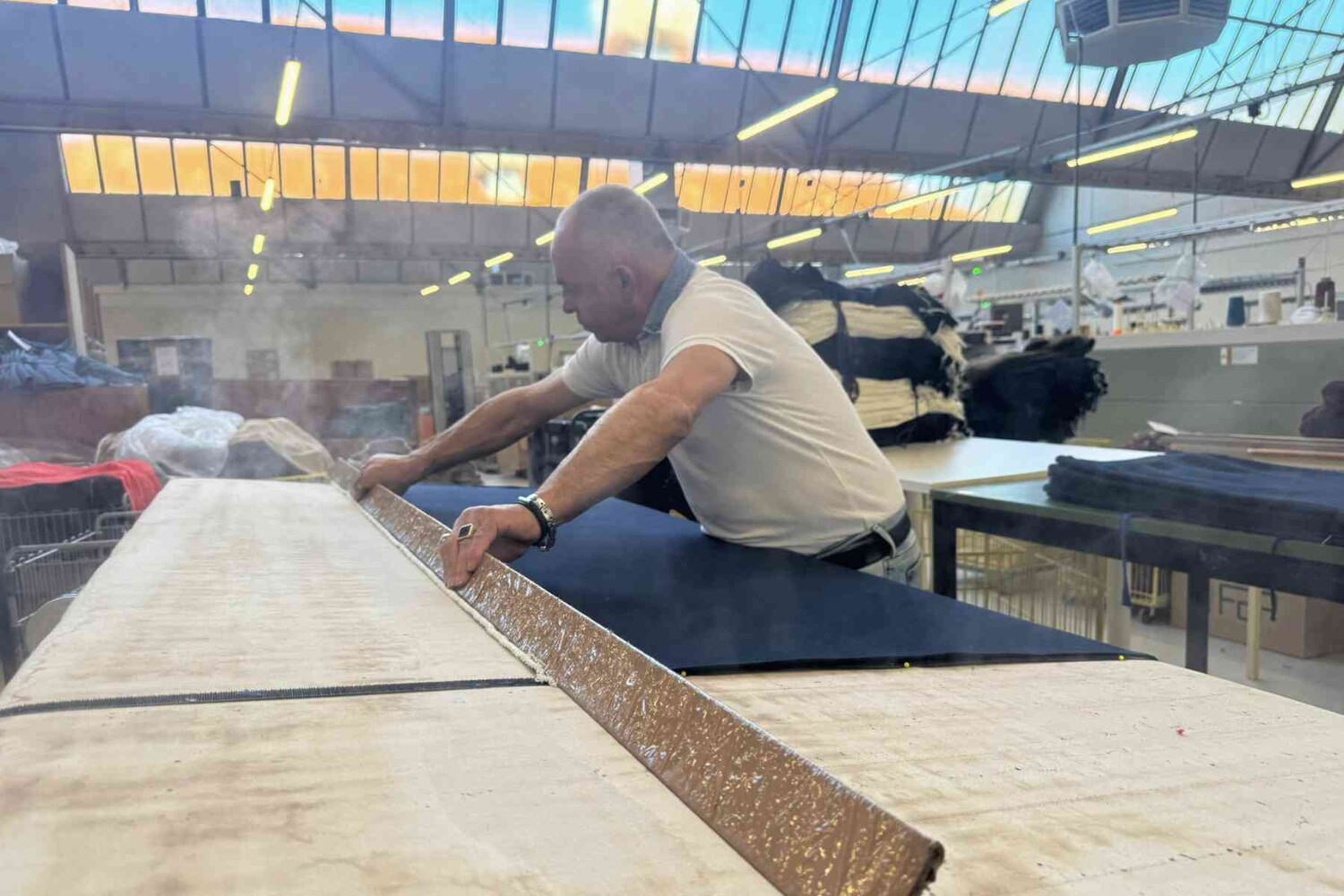
Once knitted, the material goes through a key stage: steaming "to stabilize the knits and avoid surprises when washing", explains Florence Desseignet. This step takes place at several points in the process: after knitting, after garment making, and then in finishing. In this way, the Knits set, shrink slightly and take on their final shape. A detail invisible to the customer, but essential for the final quality and care of the pieces.
Transmit and stand the test of time
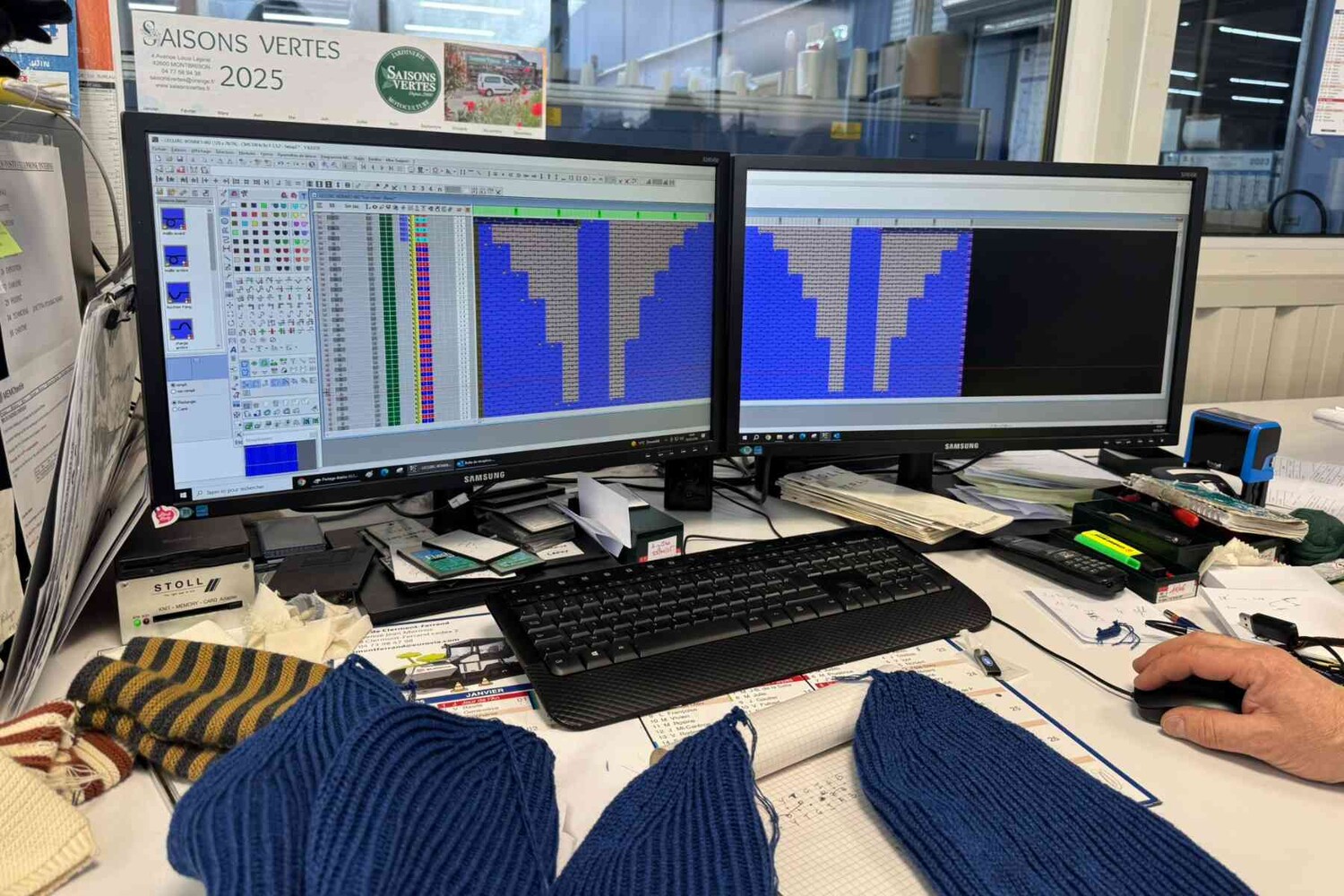
Beyond the machinery, the central issue remains its mastery, which requires real savoir-faire. In both workshops, training is carried out in-house through mentoring. Technicians learn to program, adjust and monitor several machines at once: "a technician can be responsible for eight machines", testifies Benoît Mus. Versatility is essential in workshops where profiles trained specifically in knitting remain rare. At Jean Ruiz, the situation is similar, where "we recruit manual profiles, not necessarily from a textile background, and we train them continuously so as not to lose the savoir-faire", explains Florence Desseignet.
The group is also facing a more uncertain economic context. "After Covid, there was a real craze for Made in France. But today, customers understand prices less", observes Florence Desseignet. The result: a stricter selection of projects to "remain viable". "Some brands have made their CSR policy a priority, and manufacturing locally is part of that. We have to believe it's the right strategy: our customers are doing well, even very well in a market undergoing complete change", nuances Karine Renouil-Tiberghien.
On the environmental front, solutions are also being put in place. Textile scraps are recycled locally to produce insulation, while certain materials are reclaimed. A pragmatic approach, anchored in the day-to-day running of the workshops. Between volume production, technical development and creative support with Démaillé, the group is moving forward with a clear line: maintain industrial capacity in France, without giving up on high standards. "Factory automation, which is gathering pace, could bring business back to France, as the difference in wage costs will be less of a determining factor. But this will only be possible if we haven't lost our savoir-faire", concludes Karine Renouil-Tiberghien. "There are still around twenty knitters in France", reminds Benoît Mus. A reality that lends all the more weight to these precious savoir-faire to be preserved.
To find out more, discover the company files for La Manufacture de Tricots Jean Ruiz, La Manufacture de Layette et Tricots Techniques and the Démaillé workshop.