Meet designer Steven Passaro

Concerned about the environment, Steven Passaro, founder and artistic director of the eponymous brand, sensitively rethinks men's wardrobes and develops all his designs using 3D prototyping. This technique enables him to create a single prototype before moving on to the production of the final garment.
We went to meet her in her Parisian atelier to discover her world.
Would you tell us about your background and the concept behind your brand?
I studied at the London College of Fashion, where I graduated in 2019. London was the starting point for this whole adventure, it's where I created my universe. I started to make a name for myself, then the Brexit arrived with a climate of tension, so I decided to return to Paris.
I prepared a first post-study collection that I presented in September 2020 to the press and very quickly I had a bit of visibility. I met with DEFI, the Federation of Haute Couture and Fashion, who support me, to arrive today at the 6th post-study collection!
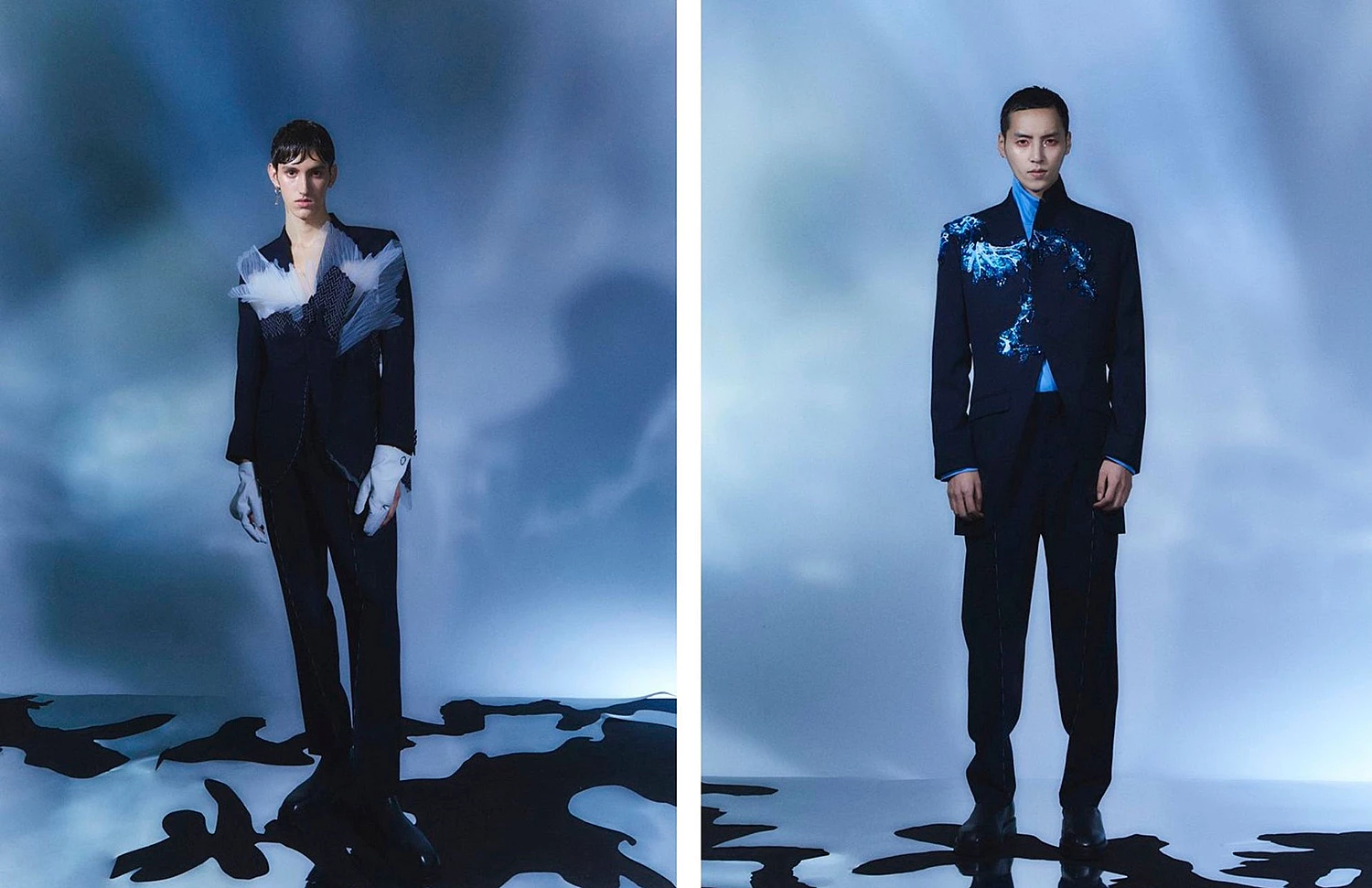
Concerning the concept of my brand, the idea is to evoke emotions and delicacy through my men's wardrobe. It's important for me to transcribe my hypersensitivity in my designs, which can be seen in the choice of fabrics and the cut of my pieces.
The new Water Boys collection plays with the idea of water and questions the reflection and depth of the self with plays on transparency, layering and always plays on pleats. Across the board, there's of course this love for savoir-faire and garment construction.
You create your designs in 3D before launching prototypes, can you tell us why you chose virtualization and what are its advantages?
I became aware of environmental and ethical issues in fashion when I was in London. For me, the question was how to rethink the production chain to be more respectful of the planet.
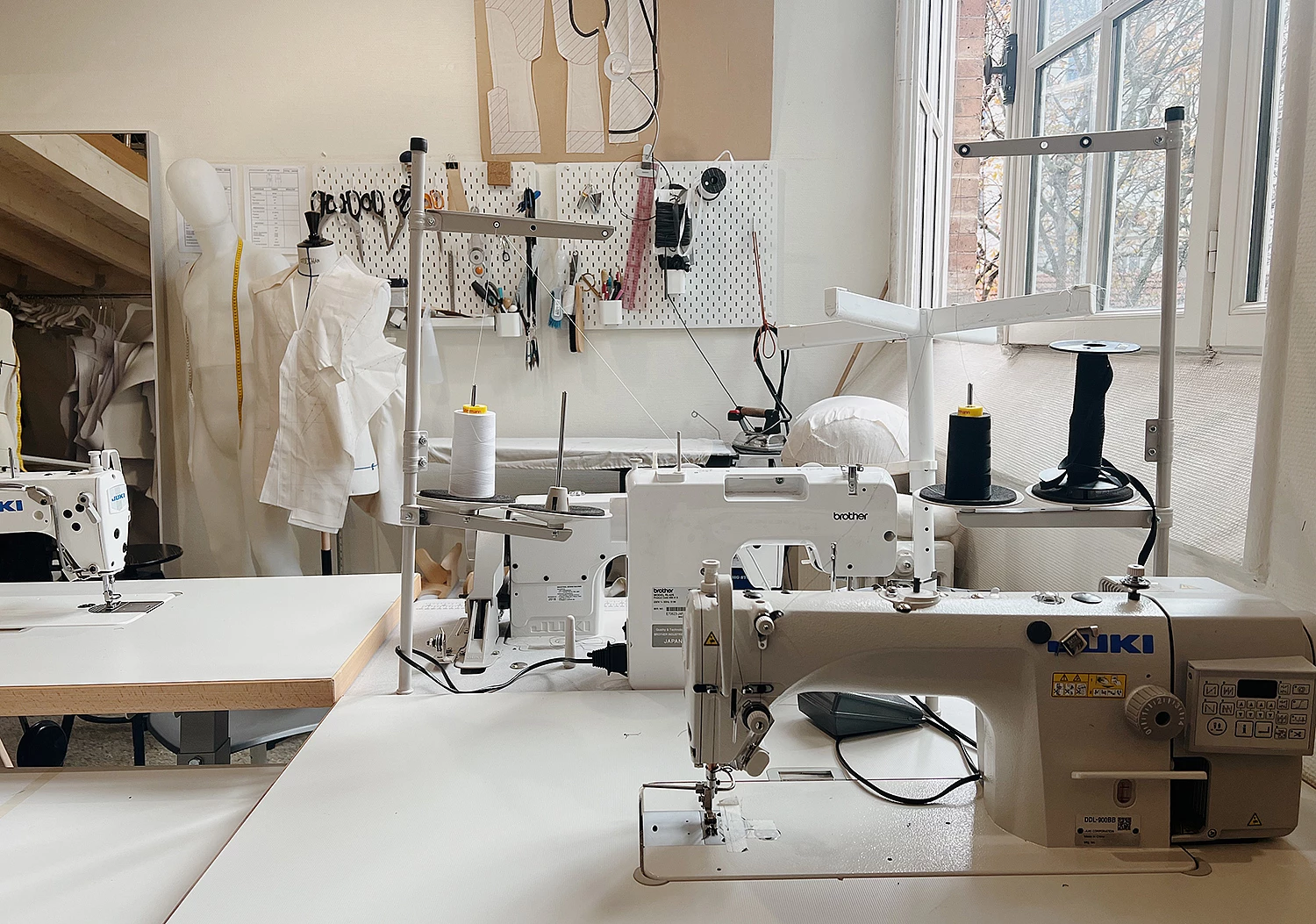
As I had discovered Clo 3D in class, I wanted to research the subject further and understand how to optimize the patternmaking development phase in terms of time but above all in terms of material use. This led me to use 3D for my own collections. In concrete terms today, I still draw by hand or on iPad. Once we've drawn up our collection plans, we pattern on Clo 3D, then print and mount the canvases. There's just one phase of corrections on the canvas and on Clo 3D to finish the design.
The advantages of 3D are that it's more ecological because we save fabric, and in terms of responsiveness we've divided the time by 3. A hand-made prototype of a Tailoring blazer takes around 2-3 days, whereas on Clo 3D it's done in a day.
It's also more economical, as the software is affordable. When more contract manufacturers start using 3D, it will be easier for us because they'll be able to see directly how the model is assembled.
You have a large part of your collection manufactured in France. Can you tell us why you chose French manufacturing and what your relationship is with French contract manufacturers?
Today we work with just under a dozen manufacturers, mainly in France with a real desire to go local. For us it's very important in terms of environmental impact to be close to the workshops.
Made in France is also important in terms of image: for a luxury brand, it's part of the ethos.
As a general rule, we have very good communication with manufacturers. Most of them understand our quantity and price constraints very well, like the product and want to trust us. We manage to work together over several seasons. We do a lot of work on tailoring blazers, and unfortunately this is a savoir-faire that is no longer widely available in France. It's a sad reality. For everything else, like denim or shirting there are some very good ateliers in France, although they're often fully booked.

What consulting advice would you give to brands and young designers looking to get into Made France?
First, I'd say meet the manufacturers and go and visit the workshops to get to know them better. This allows you to see the products they've already made, get a good grasp of their savoir-faire and find out who they're working with.
Secondly, have your specifications ready with prices, deadlines and sign a contract if possible.
Finally for the first collections, manage your budget and cash flow well because it's going to be a little while before you start selling.
How did the Maison du Savoir-Faire et de la Design help you in your research?
When I arrived in Paris, I met with DEFI and the federations. It was DEFI who introduced me to the platform. I then contacted the Maison du Savoir-Faire et de la Design, which advised me on manufacturers, and I also used the platform, which helped me a lot in my research.
To discover Steven Passaro's world and designs: https://www.stevenpassaro.com/