La Fabrique d'Arakné: Reuse as a Creative and Collective Challenge
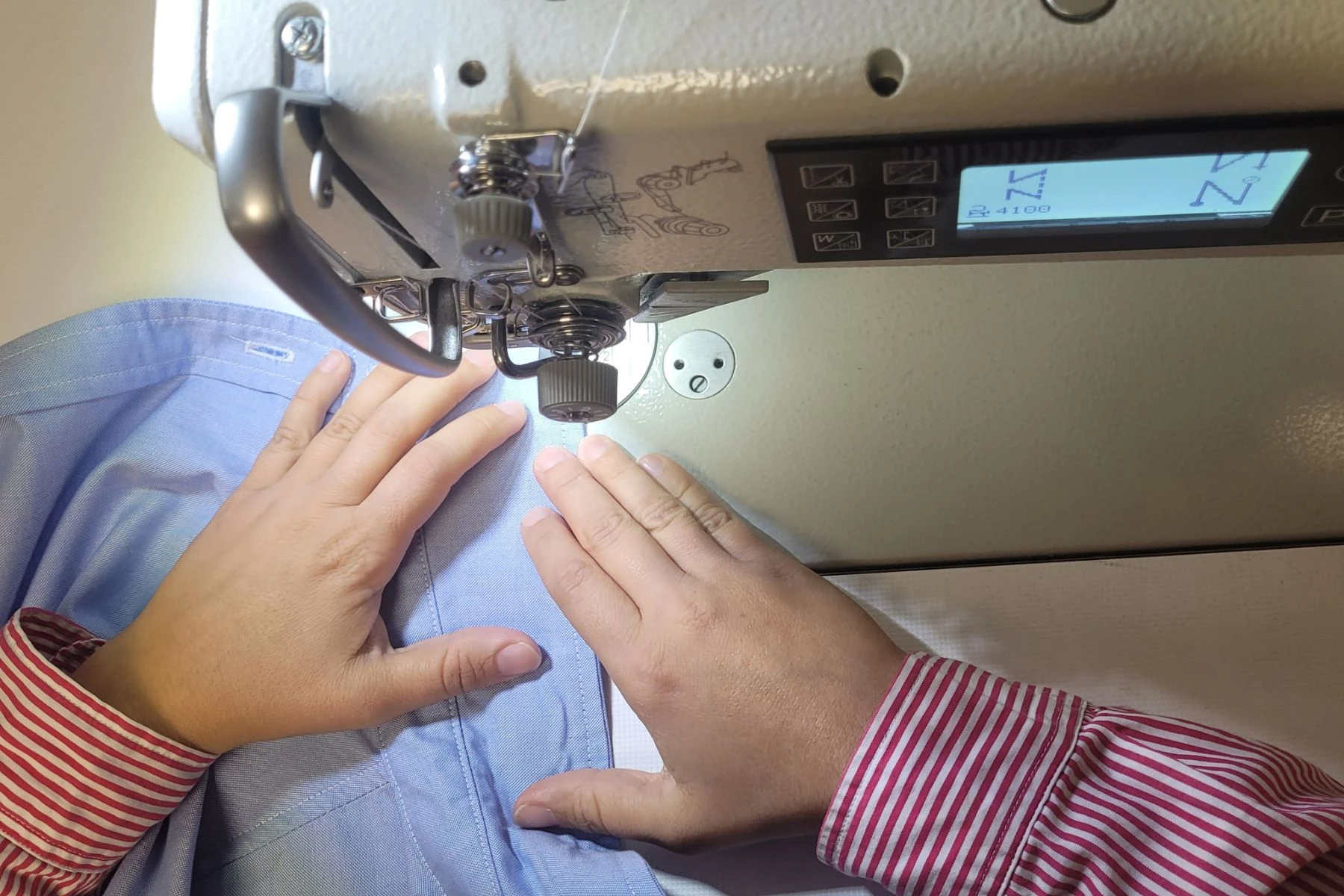
In Nantes, La Fabrique d’Arakné supports institutions, local governments, professionals, emerging brands, designers, and project leaders in their garment making projects. Founded in 2024 by Julia Bourlier, this community-based workshop combines the reuse of materials with savoir-faire to produce custom-sized batches. It embodies a French approach to manufacturing where responsibility, creativity, and support take center stage.
From prototype design to the production of clothing and accessories, La Fabrique d'Arakné adapts to requests as diverse as its clients' profiles. Led by a team with complementary skills, the organization champions small-scale production that is mindful of available resources and deeply rooted in its local community.
From sewing classes to a clothing manufacturer
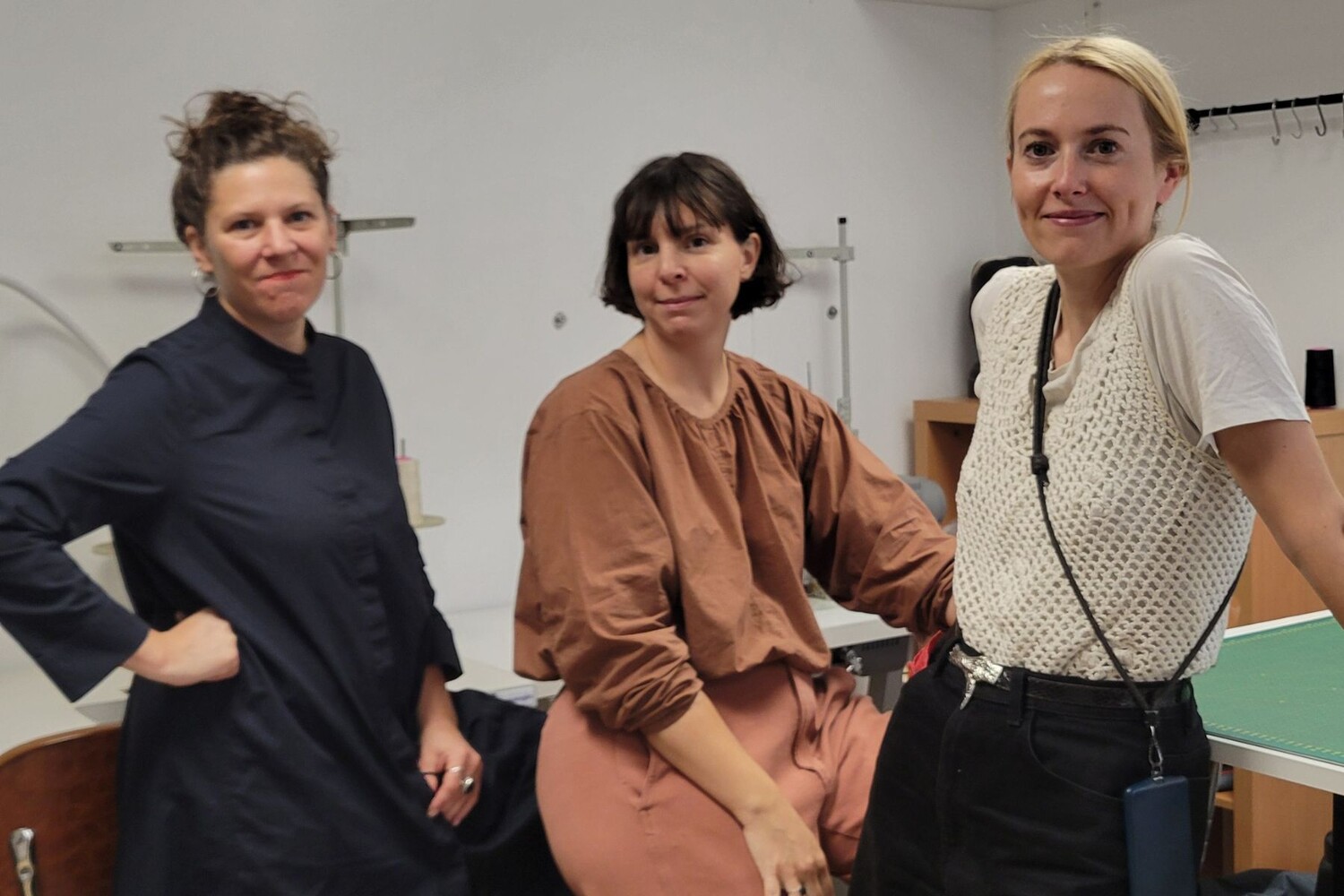
Parsy and Flora Guillet-Thomé.
Photo credit: © La Fabrique d’Arakné">
The story of La Fabrique d’Arakné begins long before its design. In 2012, Julia Bourlier, then a costume designer for live performance, film, and the circus, founded Les Cousettes de Nantes. Born out of a desire to pass on the art of sewing, the association offers classes to a variety of audiences and now has over a hundred members. Over the years, however, Julia noticed that many participating designers struggled to find French workshops capable of producing in the right quantities.
Drawing on her experience as a costume designer—which allowed her to work with a wide variety of materials and technical constraints—she envisioned an organization capable of meeting these needs. With support from the Nantes-based incubator Les Ecossolies in 2023, La Fabrique d’Arakné was launched the following year, with the goal of making local and sustainable garment making accessible to small brands, while taking on the valuable challenge of promoting workshop professions!
Today, the permanent team consists of four people, supported by about ten patternmakers who are called upon as needed for specific projects.
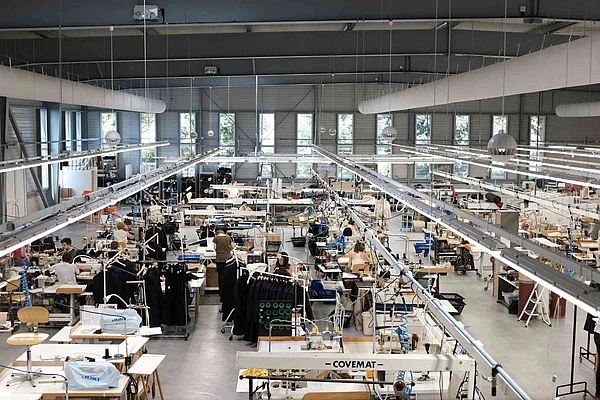
Today, the permanent team consists of four people, supported by about ten patternmakers who are called upon as needed for specific projects. Alongside Julia Bourlier, Flora Guillet-Thomé coordinates projects and client relations; Morgane Lissonde oversees production and workshop organization; and Noémie Parsy heads the product development unit. This flexible structure allows us to bring together model-makers and seamstresses who specialize in different stages of production, while helping them develop their skills.
The association’s status also reflects a commitment to local involvement: “We’re an association because we’re deeply connected to life in Nantes. Promoting upcycling, reuse, and ‘Made in France’ also contributes to the city’s image. This involvement is a valuable asset,” explains Flora. The workshop thus collaborates with local institutions while developing educational workshops on reuse, leather, and wool for personal use.
Great flexibility, from the product development unit to production
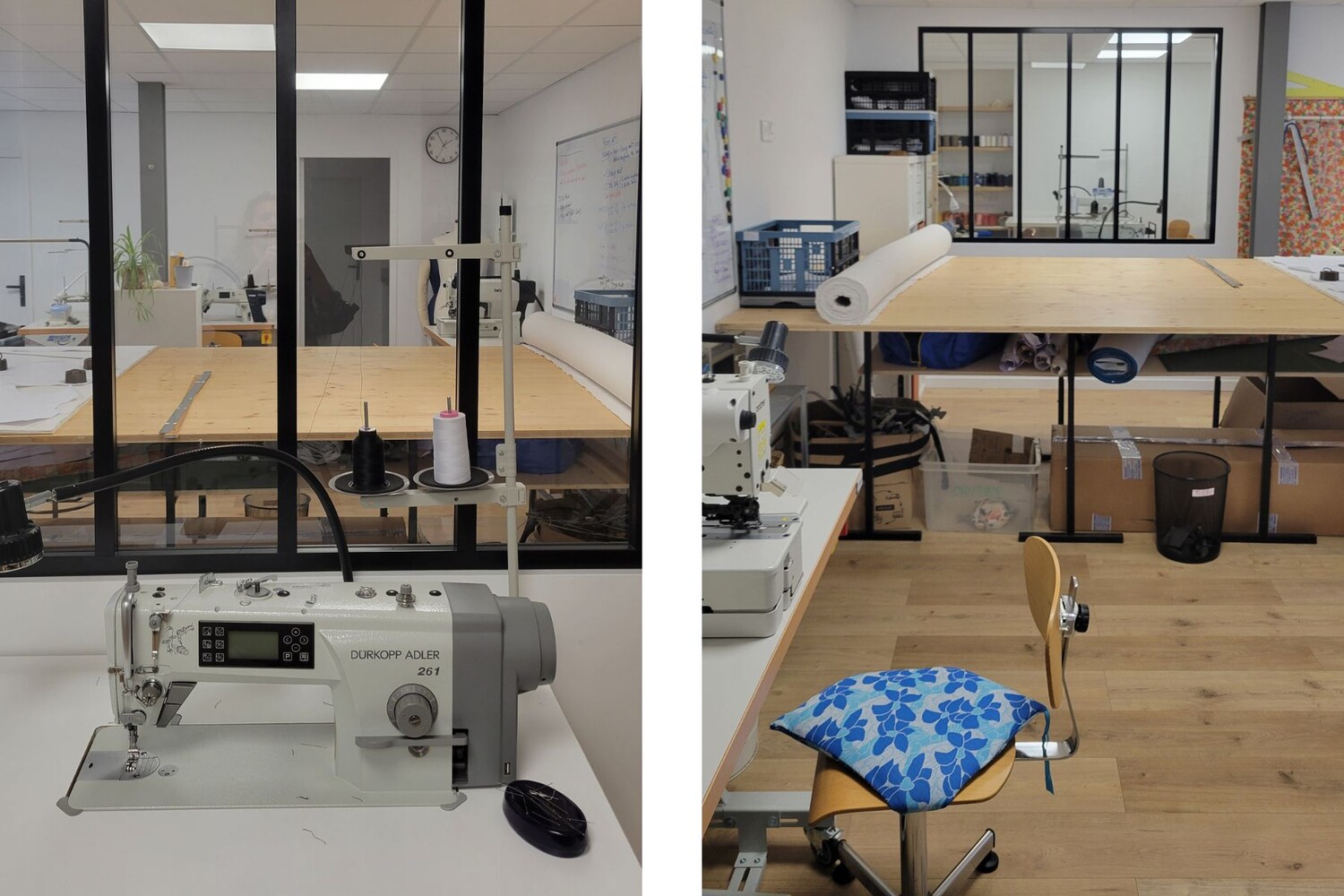 Photo credit: © La Fabrique d’Arakné">
Specializing primarily in warp and weft sewing, the workshop can work with denim and produce shirts, skirts, pants, and lined blazers, as well as bags, pouches, and bike covers. Overlock sewing machines, coverstitch machines, flat-bed sewing machines, and triple-feed sewing machines allow the workshop to work with various materials and finishes, from French seaming to hand-stitched details.
With a production capacity of up to approximately 500 ready-to-wear pieces and no minimum order requirement, the workshop works with young brands, independent designers, as well as institutions and professional clients. “We get excited whenever we see new projects coming in,” says Noémie, drawn to “the wide variety of projects and the range of possibilities.”
The product development unit plays an essential role in this versatility. With a background spanning textile design, technical fashion design, teaching, and entrepreneurship, Noémie can support project leaders from the very first creative stages with mood boards, style boards, patternmaking, prototyping, and production preparation. “And when a project is entrusted to us directly for production, we always request a pattern review”, she explains. This is an essential step for anticipating technical challenges, adjusting the designs, and ensuring their feasibility.
This support is accompanied by a genuine educational approach.
“We take the time to explain the value of our professions, the necessary skills, and why product development can take six or nine months,” emphasizes Flora. The goal is also to raise brands’ awareness of the true cost of French garment making.
This attention is particularly important for young designers, whose projects inspire the team.
“The storytelling they create and the poetry they bring—that’s what drives us,” explains Noémie. The challenge, then, is to preserve their creative identity while finding solutions that are technically and economically feasible. In particular, the workshop has supported designer Matthieu Ruiz, whom they met through the Maison du Savoir-Faire et de la Création as part of the SPHERE PFW® Showroom.
Reuse as a testing ground and a path to the future
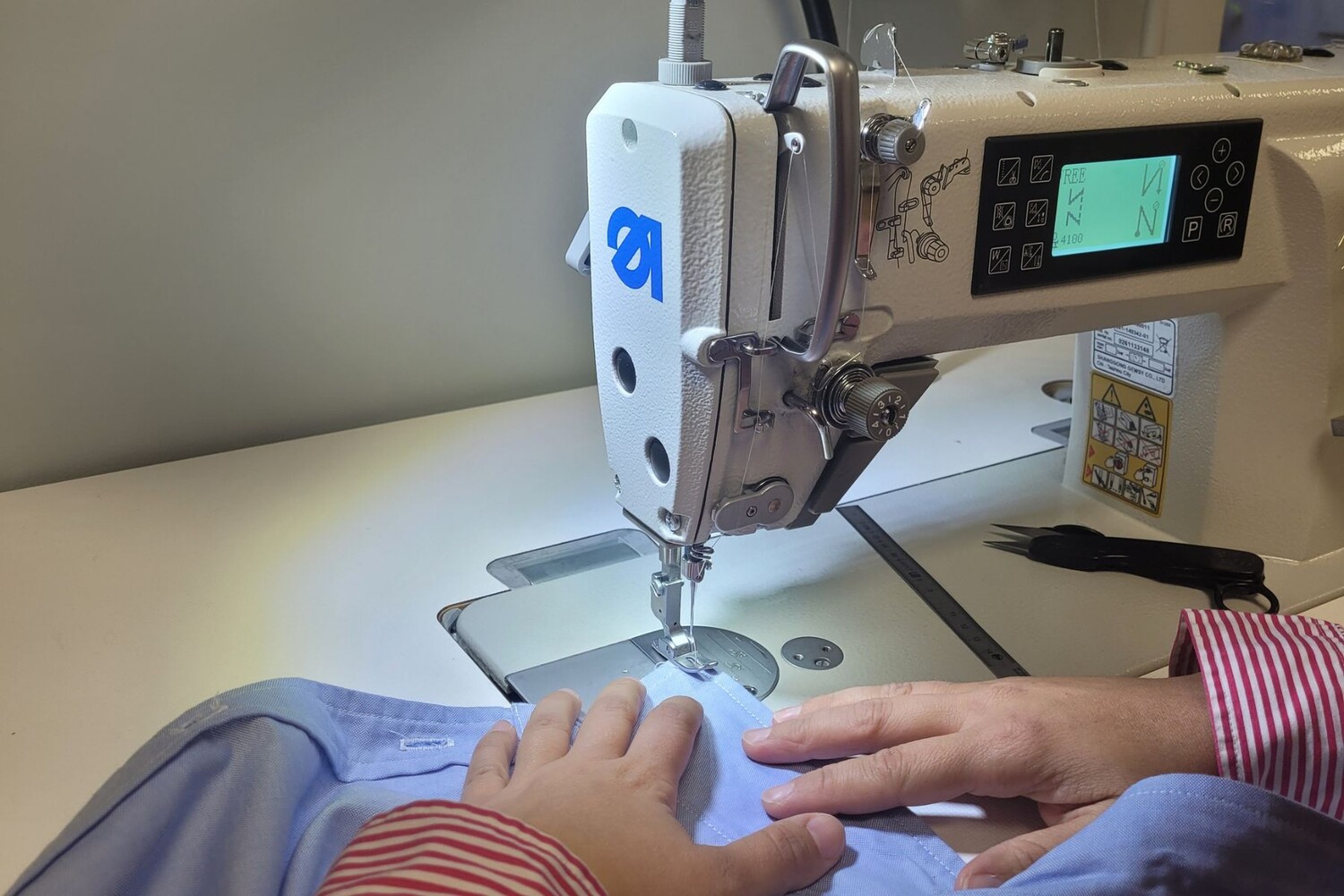 Photo credit: © La Fabrique d’Arakné">
At the heart of La Fabrique d’Arakné’s identity, textile reuse is much more than just a specialty—it drives the brand’s approach to design and production. The workshop transforms existing materials into new objects, such as Patagonia bags designed for surfers—made from used fishing jumpsuits to carry wet gear—or skirts crafted from old beach towels for the Nantes-based brand Horizon.
However, working with recycled materials involves specific challenges, since “it can’t be automated—you have to examine each piece individually”, explains Morgane. Dimensions, the condition of the materials, the placement of pieces, and cutting possibilities all require significant analysis up front. The founder explains: “We’re manufacturers, but also a product development unit and a laboratory,” capable of transforming these constraints into creative solutions.
This approach goes beyond upcycling orders alone, because even when a project does not initially call for reuse, the team seeks to incorporate at least 10% of existing materials. Its local network facilitates these projects, as a company’s textile waste can thus become the raw material for a young brand. “Our network allows us to offer advantageous solutions to clients and do our part,” the team emphasizes. This initiative, however, faces the major challenge of the lack of a centralized network for collecting and redistributing textile resources. This is an issue on which the association wishes to continue its local engagement, particularly through collaborations with local governments.
Among the avenues for development is the design of “a line of accessories made from tarps, since that’s a material we source in large quantities”, says Morgane. The team is also considering launching a repair service, while strengthening its partnerships with local stakeholders, including the Artefact project. Through these initiatives, La Fabrique d’Arakné intends to continue its growth without losing what makes it unique: the ability to combine technical expertise, creativity, and adaptability. This is one way to demonstrate that small batch production and upcycling can also open up new possibilities for French garment making.