Workwear at Kiplay: Where Inspiration Meets Innovation
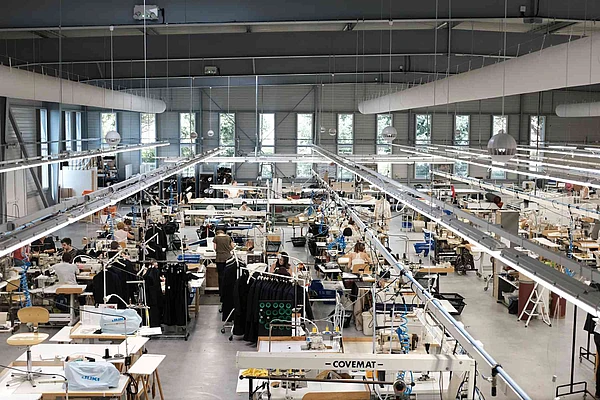
Founded in 1921 in the Orne department, Kiplay specializes in workwear and denim. Awarded the “entreprise du patrimoine vivant” (EPV) designation, this family-owned business manufactures products in its workshop for its ready-to-wear brand, Kiplay Vintage, as well as for many others. Alongside his wife Corinne, Marc Pradal represents the third generation at the helm of Kiplay, and their son Clément is carrying on this family tradition, preparing to take over the business.
From historic workwear to fashion collections inspired by its archives, Kiplay has successfully expanded its business. Its product development unit and workshop now support projects ranging from technical apparel to ready-to-wear.
Workwear designed to adapt
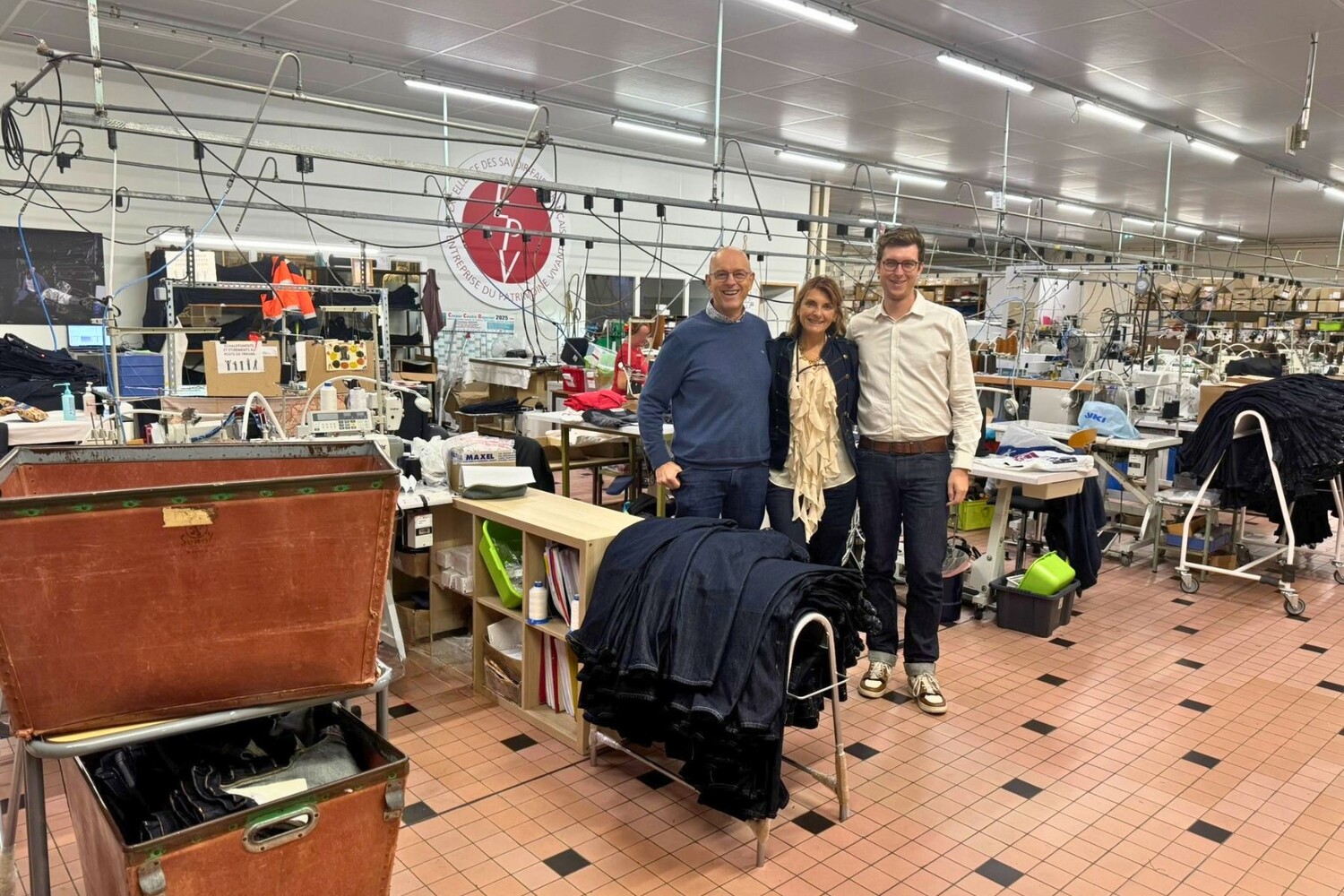 In the photo: Marc Pradal, Corinne Pradal, and Clément Pradal.">
It all began when Marc Pradal’s grandparents decided to expand into garment making rather than continue the family’s clog-making workshop. They initially produced pants, blazers, and workwear. In the 1930s, the company grew and secured contracts with the SNCF and the RATP, among others. Under the leadership of Hubert Pradal, who took over management in the 1960s, the company’s workshops began producing ready-to-wear clothing, particularly pants.
Marc Pradal became familiar with the company long before taking the helm. As a teenager, he accompanied the drivers on delivery runs to Paris and the mechanics responsible for repairing the machinery in the workshops.“I dabbled in a little bit of everything,”he recalls. When he officially joined Kiplay in 1987, the company was in receivership. “I quickly shifted the business toward branded workwear, even though at the time we were mainly manufacturing traditional work overalls”, he explains, “and then toward the production of protective clothing” and responds to national public or private calls for bids, which remains the company’s main activity today.
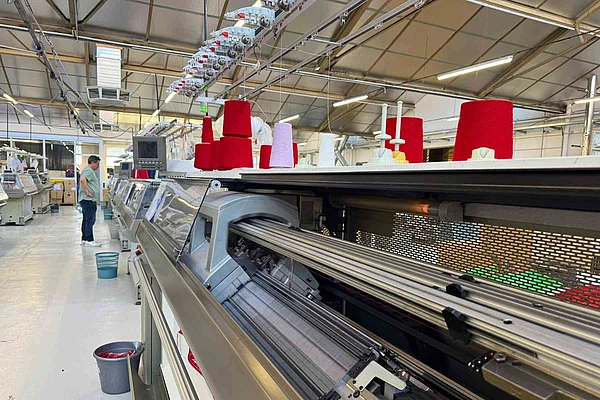
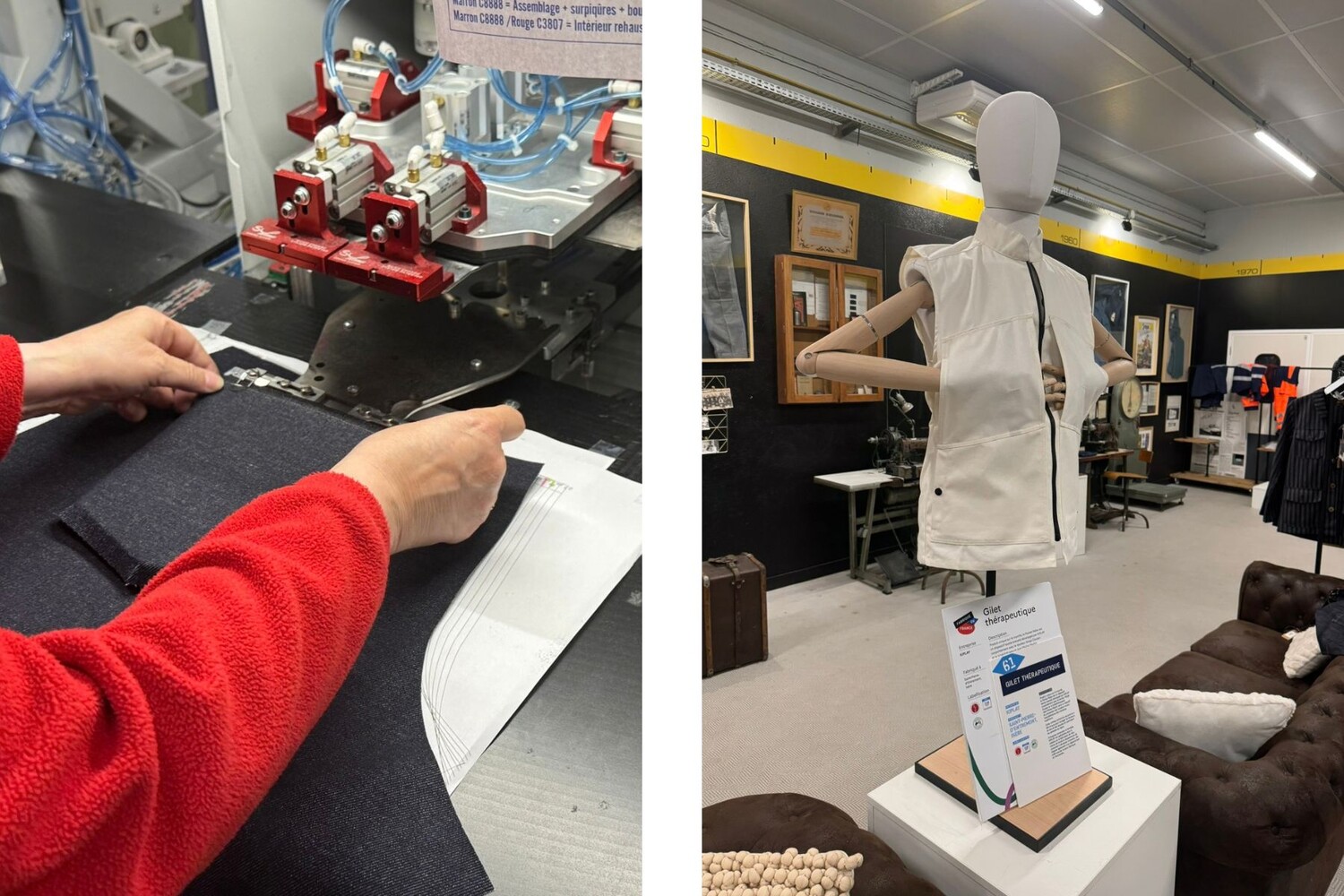
Its product development unit develops technical apparel, uniforms, and corporate wear, as well as personal protective equipment (PPE), particularly multi-risk or high-visibility clothing. Among the solutions developed by Kiplay is a double-zipper jumpsuit, now widely adopted by farmers because it can be put on without removing their shoes. Kiplay also seeks to improve the comfort of its garments by using materials such as softshell. In collaboration with doctors and physical therapists, the company is even currently developing a therapeutic vest with pockets designed to provide support for the upper body, particularly for people suffering from joint problems.
Industrial savoir-faire to be showcased
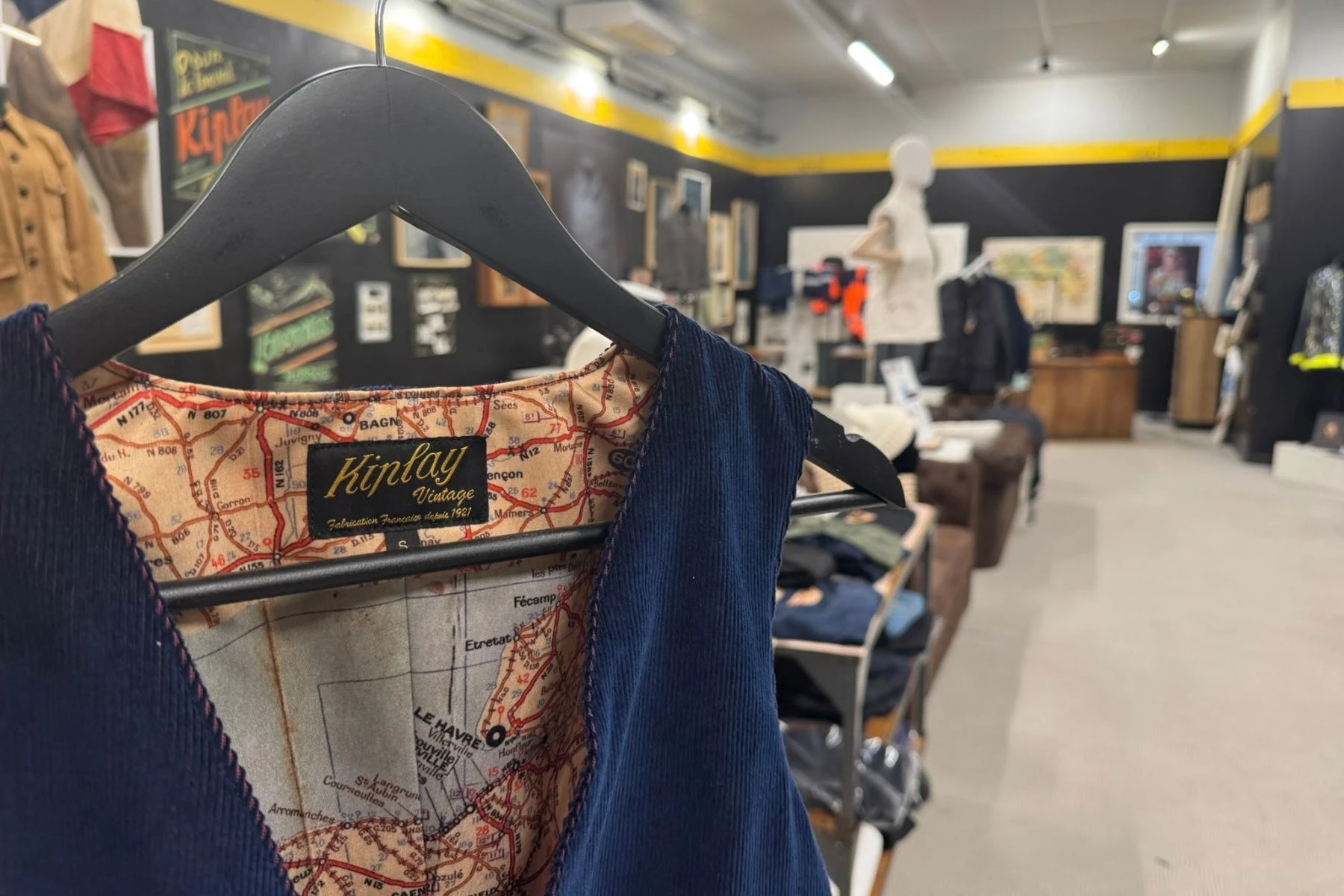
The first Kiplay Vintage ready-to-wear collection was launched in 2017. Clément Pradal, Marc’s son and a graduate of the ESIV fashion school, helped develop this line. Kiplay Vintage draws from the company’s archives, particularly its workwear heritage. The brand also reflects the family’s attachment to Normandy, notably through an old map of the region featured inside many of its garments. In addition, Kiplay collaborates with other Normandy-based manufacturers, including Saint James, Filt, Le Parapluie de Cherbourg, and Bohin.
Kiplay Vintage thus helps showcase the workshop’s expertise because “we are, above all, manufacturers”, he points out. Indeed, the workshop also puts its savoir-faire in warp and weft to work for other brands, crafting jeans, pants, shorts, blazers, jackets, and trench coats. It has also developed savoir-faire in embroidery, marking, heat transfer, and flocking to customize garments according to its clients’ needs. “We need a balance in manufacturing between producing our own brand and doing work for others,” explains Marc Pradal.
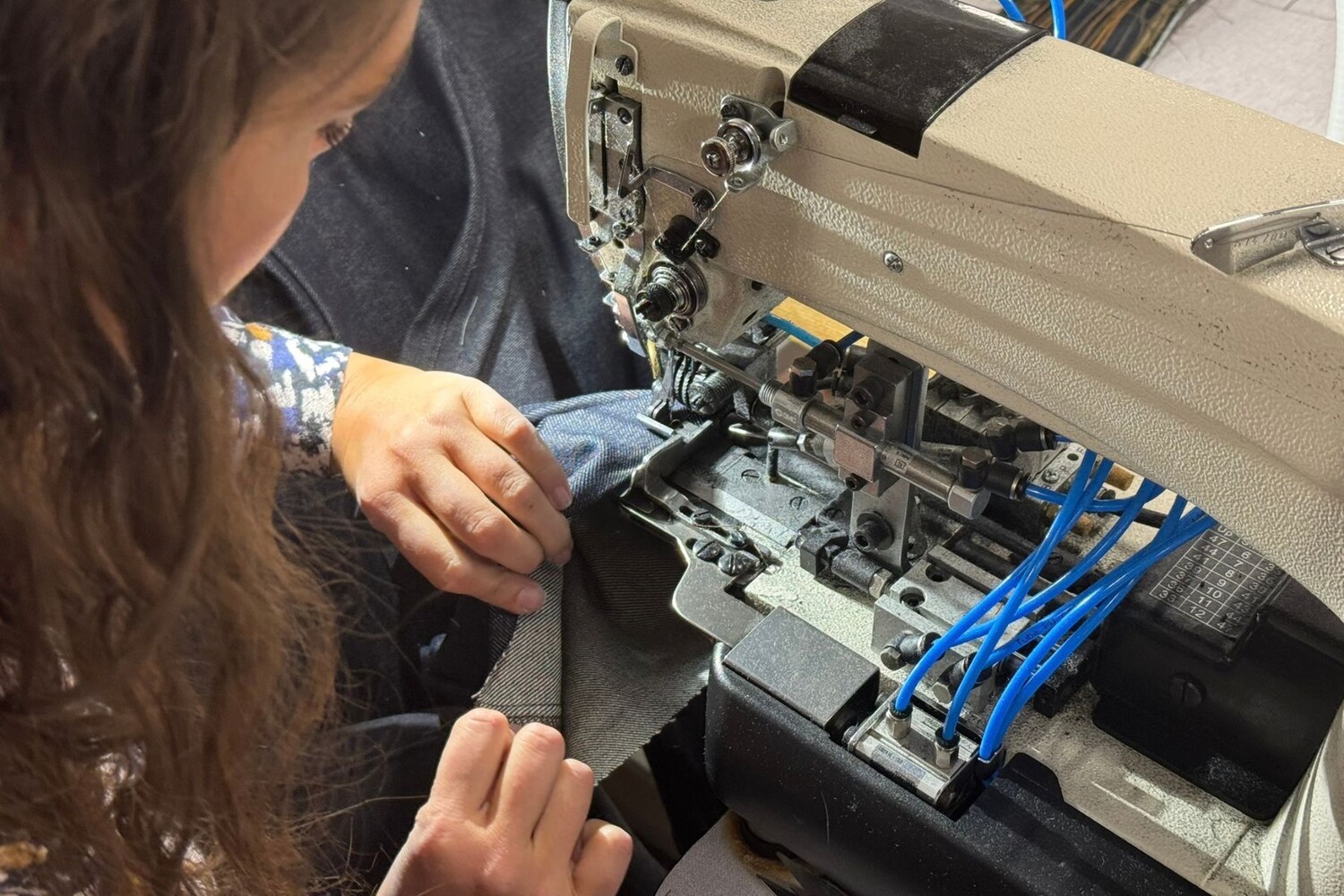
For jeans, Kiplay has resumed a washing operation to oversee the garments through to the final finishing touches. “We have complete control over the jeans, from garment making, washing, post-wash inspection, reworking […] to finishing before shipment,” explains Marc Pradal. A robotic sewing machine speeds up the process of attaching pockets, but a person must check the results because a defect may appear after washing and require rework. With this in mind, every piece that leaves the workshop undergoes quality control!
The Next Generation: One Step at a Time
The workshop must be able to rely on people trained in multiple operations. This versatility helps Kiplay organize production with a certain degree of agility, but it is acquired over time. “The transfer of savoir-faire is something that happens all the time, to some extent,” emphasizes Marc Pradal. The company organizes this on a daily basis, particularly by anticipating retirements so that skills can be shared in advance. Some former employees occasionally return to work under the “employment-while-retired” program, bringing their experience to the current teams.
Kiplay is also committed to training in its local area. “We’ve reestablished a BTS program in Vire, as well as bachelor’s and master’s degree programs, and a production school in Condé, Normandy,”” lists Marc Pradal. The company also opens its workshop and the space dedicated to its history to visitors. “We’re trying to foster a sense of connection with Kiplay and also showcase our expertise,” he explains. Developed with the support of Entreprise et Découverte, these numerous tours—part of industrial tourism—showcase the professions behind the clothing and can inspire future careers.
This focus on the teams is part of a broader initiative. In particular, Kiplay offers warm-ups, workout sessions, and activities such as cooking workshops to its employees. The company also monitors its water and energy consumption, conducts carbon assessments of its clothing, and sends its denim and fabric scraps to a partner responsible for repurposing them. Kiplay has also maintained its own beehives on-site for the past 8 years to produce honey that is given to employees and customers.
Thus, Kiplay has never viewed workwear as a static design, and it is through this ability to evolve its products—while maintaining control over their manufacturing—that the company has carved out a niche for itself among both professionals and fashion brands. To ensure this diversity endures, there is ongoing daily work—less visible than the collections—involving training teams and equipping them with the skills to master, and then pass on, the techniques of garment making.
To learn more, check out the Kiplay company profile.